

Nestled in the tranquil heart of Hoi An’s ancient town, the Trieu Chau Assembly Hall (or affectionately known locally as Ong Bon Pagoda) stands as a proud architectural masterpiece of the former Chinese community. More than just a place of worship for the revered General Phuc Ba, believed to bring peace to fishermen, this historical site also amazes visitors with its exquisite mother-of-pearl carvings and vibrant ceramic reliefs. Join us on a journey to discover the timeless beauty of the Trieu Chau Assembly Hall and understand why it’s an unmissable stop on the Quang Nam heritage tourism map.
Chaozhou Assembly Hall – Ong Bon Pagoda, a sacred place in the heart of the old town.
Amidst the moss-covered ancient streets of Hoi An, home to numerous religious structures of the Chinese community, the Trieu Chau Assembly Hall stands out as a serene spiritual space rich in cultural depth. Many visitors come here not only to admire the ancient architecture but also to experience the sacred atmosphere characteristic of a temple dedicated to Ong Bon, a protective deity highly revered by the Chinese diaspora.
Unlike the flamboyant and imposing scale of some other assembly halls in the old town, the Chaozhou Assembly Hall possesses an elegant and discreet beauty, yet it holds profound historical and religious value. This very tranquility makes it an interesting stop for those wishing to explore the cultural depth of the Chinese community in Hoi An.
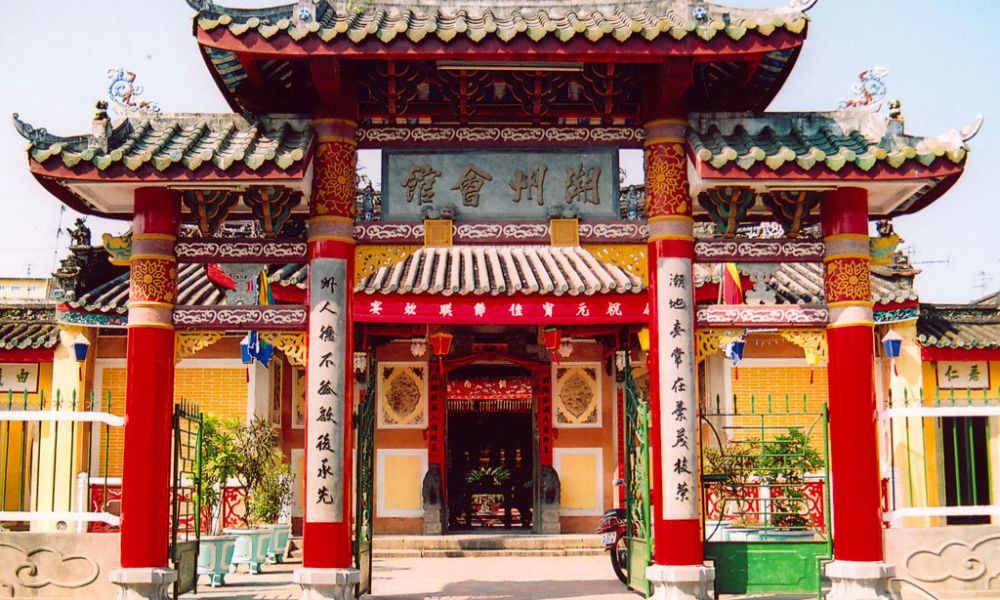
Figure 1. Chaozhou Assembly Hall
An overview of the Chaozhou Assembly Hall
The Chaozhou Assembly Hall was built by the Chaozhou Chinese community who came to live and trade in Hoi An centuries ago. The building was created to provide a community space where compatriots could meet, hold ceremonies, and maintain traditional customs. The Chaozhou Assembly Hall is located at 362 Nguyen Duy Hieu Street, Hoi An City. Visitors can easily find it using Google Maps.
Besides its community role, the assembly hall also serves as a place of worship for Ông Bổn, a deity considered the protector of the new land and a bringer of peace to the migrants. Therefore, the Triều Châu assembly hall is also known by many as the Ông Bổn Temple in the heart of the old town.
Having existed for centuries, the structure has retained its ancient charm and become an important part of Hoi An’s historical heritage system. After visiting the ancient relics, many tourists also take time to explore Hoi An cuisine, this is an important part of what makes the old town so attractive.
Why does the Trieu Chau Assembly Hall in Hoi An hold special significance for the Chinese community?
For the Teochew Chinese community, the assembly hall is not only a place of worship but also a symbol of solidarity among compatriots. When Teochew merchants and residents left their homeland to establish themselves in Hoi An, they brought their beliefs and culture with them to build a strong community.
The assembly hall became a venue for traditional ceremonies, major festivals, and important community activities. Here, generations of Chinese people could maintain their cultural identity, pass on customs and traditions, and stay connected to their roots.
It is this profound cultural role that gives the Teochew Assembly Hall special significance in the spiritual life of the Chinese community.
A prominent spiritual space amidst the old town.
Upon entering the assembly hall grounds, visitors can easily sense the tranquil and solemn atmosphere, a stark contrast to the hustle and bustle of the old town outside. The faint scent of incense, soft lighting, and ancient architectural details create a uniquely serene feeling.
The worship space is arranged solemnly with an altar, statues of deities, and traditional offerings. All of these reflect the deep spiritual beliefs of the Chinese community.
It is the combination of ancient architecture and sacred atmosphere that makes the assembly hall a distinctly cultural experience attraction.
The role of the Teochew Assembly Hall in the system of Chinese assembly halls.
Within the system of Chinese assembly halls in Hoi An, the Teochew Assembly Hall holds a special place due to its role as a representative of the Teochew Chinese community.
Each assembly hall in Hoi An is associated with a different community group, such as the Fujianese, Cantonese, or Hainanese. The Teochew Assembly Hall contributes to completing the diverse picture of Chinese culture and beliefs in the ancient trading port of Hoi An.
The existence of numerous different assembly halls shows that Hoi An was once a gathering place for many international merchant communities, creating a rich cultural identity for the ancient town. If you want to learn more about the history of the Chinese community in the old town, you can explore further assembly halls in Hoi An, a place that preserves many distinctive architectural and religious features of each Chinese community group.
Teochew Chinese and their journey to establishing a career at the Teochew Guild Hall.
When researching the Chinese assembly halls in Hoi An, many tourists often wonder when the Teochew community first arrived and why they built the Teochew Assembly Hall. The story of the assembly hall’s formation is closely linked to the migration and establishment of Chinese merchants at the Hoi An trading port, which was once a bustling international trading center in Southeast Asia.
Understanding the Teochew Chinese community not only helps visitors better understand the history of the assembly hall but also opens up a vivid picture of Hoi An’s development during its golden age as a trading port. Today, these historical values remain an important part of Hoi An’s appeal Hoi An travel 2026, as more and more tourists come to explore the cultural depth of the ancient city.
When did the Teochew Chinese community first arrive in Hoi An?
From around the 17th century, when Hoi An became an important international trading port, many Chinese merchants from the Chaozhou region of Guangdong province followed sea routes to trade and live here.
Commercial ships connecting China with Southeast Asian countries brought Teochew people to Hoi An. Initially, they only stayed for a short time to trade goods, but gradually many families decided to settle permanently.
The emergence of this community has contributed to making Hoi An a multicultural city, a melting pot of many international merchant communities. Today, tourists visiting Hoi An often combine their trip with visits to major regional events such as Da Nang International Fireworks Festival 2026 – DIFF 2026, one of the most prominent festivals in Central Vietnam.
Occupations and commercial roles of the Teochew people
The Teochew Chinese were renowned for their business acumen and commercial acumen. Upon arriving in Hoi An, they quickly integrated into the regional trade network.
Teochew merchants were primarily involved in maritime trade, exchanging goods such as ceramics, silk, spices, and various handicrafts. Thanks to their maritime experience and extensive trade connections, they became one of the most important trading forces in the Hoi An port.
The development of the Teochew community has contributed to the economic activity and international trade of Hoi An for centuries.

Figure 2. The bustling trading port of Hoi An in previous centuries.
Why did they build the Teochew Assembly Hall?
As the Teochew community grew larger, the need for a common space to meet and maintain cultural identity became essential. Thus, the Teochew Association Hall was built as a gathering place for fellow countrymen.
The community hall served not only religious purposes but also as a meeting place for merchants to exchange business information and support each other in their lives in a foreign land. It was also a place for organizing traditional ceremonies, helping the community maintain the customs and traditions of their homeland.
The construction of the assembly hall reflects the desire to preserve cultural identity and create a sense of connection among Teochew people living far from home.
The Chaozhou Assembly Hall serves as a community center.
In the life of the Chinese community, the community hall serves as a cultural and spiritual center. At the Chaozhou Community Hall, members of the community can meet, exchange ideas, and organize many common activities.
Traditional festivals, rituals, and community events are often held here. The community hall also serves as a place where younger generations are introduced to and learn about the culture, beliefs, and history of their community.
Therefore, the assembly hall is not only an architectural structure but also a symbol that unites the Teochew Chinese community in Hoi An.
The historical role of the Trieu Chau Assembly Hall in Hoi An in the international trading port.
During the period when Hoi An flourished as an international trading port, the Trieu Chau Assembly Hall played a crucial role in connecting the Chinese merchant community.
This was a gathering place for trade information, where merchants discussed business plans and established trade relations with partners within and outside the region. Thanks to the community cohesion at the meeting hall, the Teochew trade network in Hoi An became strong.
Today, the Chaozhou Assembly Hall is not only a historical testament to the Chinese community but also an important part of the cultural heritage of Hoi An ancient town. The building helps visitors better understand the role of the Chinese community in the development of this once-famous international trading port. Besides exploring historical sites, many tourists are also interested in high-end culinary experiences and often seek out recommendations Official List of Hoi An Restaurant Michelin when planning your meals in the Old Quarter.
The Chaozhou Assembly Hall is dedicated to Ông Bổn – the patron deity of merchants.
When learning about the religious beliefs at the Chaozhou Assembly Hall, many tourists often ask who is worshipped there and why it is considered one of the most special spiritual spaces for the Chinese community in Hoi An. The answer lies in the central figure worshipped in the assembly hall: Ông Bổn, the protective deity highly respected by the Chaozhou Chinese community.
More than just a deity in folk beliefs, Ông Bổn also holds profound significance for Chinese immigrants and merchants establishing themselves in this new land. Therefore, the Trieu Chau Assembly Hall is not only a community gathering place but also a spiritual sanctuary deeply intertwined with the spiritual lives of many generations.
Who is Ông Bổn in Chinese beliefs?
In traditional Chinese beliefs, Ông Bổn (Ong Bon) is considered the guardian deity of the land and community in a particular area. He is also known as Bổn Đầu Công or Phước Đức Chính Thần, symbolizing protection, peace, and stability for the land where the community lives.
For Chinese immigrants to new lands like Hoi An, Ông Bổn holds special significance. They believe this deity will protect them from misfortune, help stabilize their lives, and bring good luck in business.
It is this belief that has made the worship of Ông Bổn an important part of the religious life of the Teochew Chinese community.
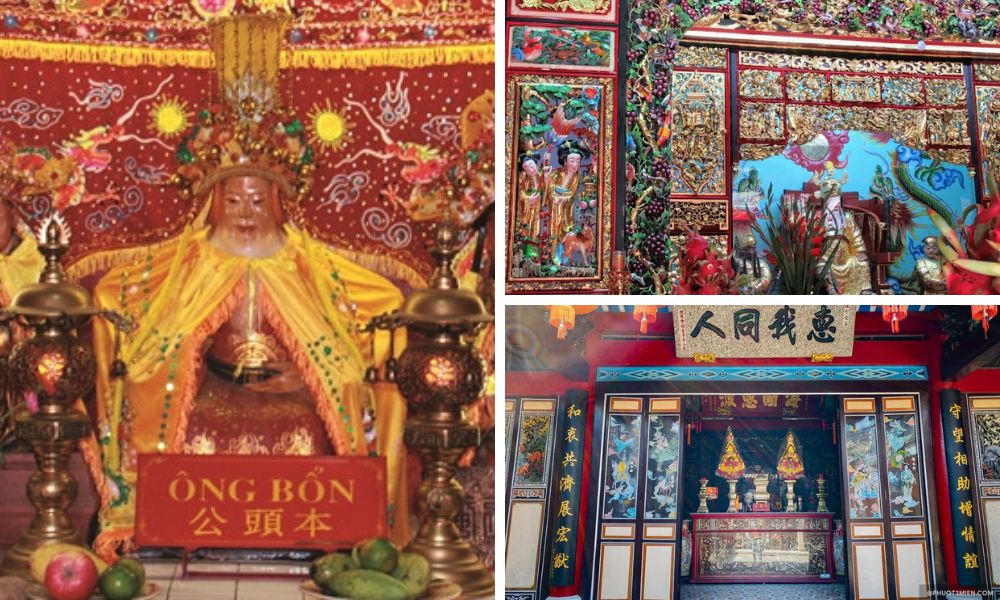
Figure 3. Ông Bổn – the deity worshipped at the Chaozhou Assembly Hall.
Why does the Chaozhou Assembly Hall worship Ông Bổn?
When Teochew merchants and residents came to live in Hoi An, they needed a spiritual space to entrust their beliefs and pray for protection in their lives in a foreign land.
The Teochew Assembly Hall was built not only as a community gathering place but also as a place of worship for Ông Bổn, a deity considered to be the protector of the land and the Chinese community.
The worship of Ông Bổn at the assembly hall reflects the desire for stability, peace, and sustainable development of the Teochew community in the Hoi An trading port. It is also a way for those far from home to preserve their traditional beliefs.
The spiritual significance of worshipping guardian deities.
In the lives of the Chinese community, the worship of guardian deities is not only a religious practice but also a symbol of community cohesion.
Ông Bổn is considered a deity who maintains order, brings peace to the residents, and helps people unite in life. Businesspeople especially believe that the protection of this deity will help their work go smoothly and avoid risks.
Therefore, the Chaozhou Assembly Hall has become a place where many people come to pray for peace and good fortune before making important decisions in life.
What do locals and merchants usually pray for at the Trieu Chau Assembly Hall in Hoi An?
Today, not only the Chinese community but also locals and tourists often visit the Chaozhou Assembly Hall to offer incense and pray.
Business people often pray for smooth business dealings, successful work, and abundant wealth. Many also come to pray for peace for their families, good health, and good fortune in life.
The sacred space, along with the pervasive scent of incense, creates a solemn atmosphere that makes many visitors feel peaceful upon entering the assembly hall.
Traditional worship rituals at the Chaozhou Assembly Hall.
The rituals and ceremonies at the Chaozhou Assembly Hall are still maintained according to the traditional customs of the Chinese community. On important occasions, people usually prepare offerings such as incense, fruits, and traditional dishes to present to the altar of Ông Bổn (the patron deity).
These rituals usually take place in a solemn atmosphere with the participation of the local community. The prayers, incense smoke, and ancient setting create a special spiritual experience for those who have the opportunity to witness them.
Maintaining traditional rituals not only helps preserve the beliefs of the Teochew Chinese community but also contributes to enriching the cultural life of Hoi An ancient town today.
The architecture of the Chaozhou Assembly Hall – A masterpiece of ceramic decoration and wood carving.
One of the factors that makes the Trieu Chau Assembly Hall a special attraction in Hoi An’s old town is its rich and artistic architectural value. Unlike some other assembly halls that may appear grand, this building impresses with its delicate decorative details and harmonious spatial layout.
The architecture of the Teochew Assembly Hall clearly reflects the traditional style of the Teochew Chinese community, where the art of decorative roofing ceramics and wood carving techniques reached a very high level. Every detail in the building carries profound cultural and aesthetic significance, creating a space that is both ancient and rich in artistic value.
Spatial layout of the Chaozhou Assembly Hall
Like many Chinese assembly halls in Hoi An, the Trieu Chau Assembly Hall is designed in a traditional layout consisting of three main interconnected parts: the entrance gate, the courtyard, and the main hall.
The entrance gate is the first impression visitors have upon entering the assembly hall. The gate’s architecture is often decorated with auspicious motifs, expressing wishes for peace and prosperity.
Beyond the gate lies a spacious open courtyard, which serves to regulate light and air for the entire complex. This space is also where community activities and traditional ceremonies take place.
At the very back is the main hall, where the altar dedicated to Ông Bổn (the patron deity) and other important religious artifacts are placed. The main hall is designed with solemnity, creating a sacred and tranquil atmosphere.
This spatial layout is not only aesthetically pleasing but also reflects the feng shui principles of the Chaozhou Assembly Hall architecture. The combination of open spaces and worship areas allows the building to be both airy and maintain the necessary solemnity for a spiritual place.

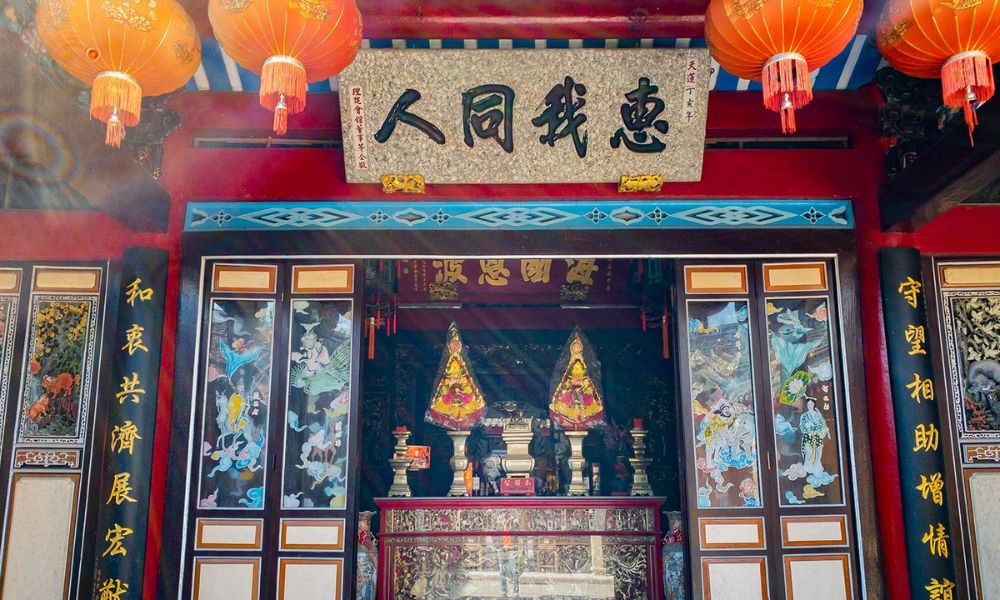
Figure 4. Interior space of the meeting hall.
Decorative roof pottery art characteristic of Teochew
A distinctive feature of the Teochew Assembly Hall’s architecture is the decorative ceramic tiles on the roof. This is a characteristic art style of the Teochew region in China, which the artisans brought with them when building the assembly hall in Hoi An.
On the roof of the assembly hall, visitors can observe many small ceramic statues arranged in lively decorative clusters. These figures often depict characters from Chinese folklore, legends, or auspicious mascots.
The scenes recreated in ceramics not only have decorative value but also tell familiar cultural stories from the lives of the Chinese people. This makes the roof of the assembly hall a very unique “storytelling picture” in ceramics.
The combination of vibrant ceramic colors and sophisticated decorative layout is what gives the architecture of the Chaozhou Assembly Hall its exceptional artistic value.
Ancient wood carving system
Besides ceramic art, the wood carving system is also an important element that contributes to the beauty of the Chaozhou Assembly Hall.
In the main hall and other rooms, visitors can easily find many carved and gilded horizontal plaques and couplets. These inscriptions often praise virtue, loyalty, or convey blessings for the community.
The wooden pillars, rafters, and doors are all decorated with intricate patterns. Ancient artisans used hand-carving techniques to create soft and lively lines.
Beyond their aesthetic value, the intricate carvings also showcase the high level of craftsmanship of the artisans involved in the construction.
Thanks to the harmonious combination of decorative roof ceramics and exquisite wood carving techniques, the Chaozhou Assembly Hall architecture has become a prime example of Chinese architectural art in Hoi An. The building is not only a sacred place of worship but also a vibrant work of art in the heart of the ancient town.
After admiring the exquisite architecture of the Chaozhou Assembly Hall, many tourists often continue strolling around the old town to find a place to rest and enjoy the local cuisine. Located right in the center and just a few minutes’ walk from the assembly halls, Chau Kitchen & Bar is a very convenient stopover point and is also mentioned by many diners as one the best restaurant in Hoi An, highly rated by international tourists.
Located in a house over 100 years old, Chau offers a space steeped in Hoi An’s charm with yellow walls, wooden furniture, lanterns, and warm lighting, creating an atmosphere that is both ancient and romantic in the heart of the heritage site. It’s a standout Asian-European fusion restaurant where Western cooking techniques are subtly combined with East Asian inspiration and local ingredients. The restaurant’s signature dish is its signature cuisine. Iron Beefsteak Hoi An renowned for its premium beef steaks cooked on a sizzling cast-iron griddle, resulting in tender, juicy, and flavorful meats, this restaurant offers a unique and refined culinary experience. In addition, the diverse Asian-European menu, featuring pasta, seafood, salads, and modern twists on Hoi An specialties, caters to a wide range of tastes.
The restaurant’s spacious and flexible setting is suitable for solo diners, couples, and large groups, especially with seating offering street views at night, where guests can enjoy dinner while watching the vibrant life of the ancient town illuminated by lanterns. After exploring the architecture and culture of the assembly halls, a dinner at Chau Kitchen & Bar is a gentle and refined way to continue appreciating the beauty of Hoi An through its cuisine and heritage setting.
- Address: 141 Tran Phu, Minh An Ward, Hoi An Ancient Town
- Phone: 0903529377
- Opening hours: 08:30 – 22:30
- Website: https://chaukitchenandbar.vn/en/homepage/
- Facebook: https://www.facebook.com/Chaukitchenhoian
- You can book a table directly through the website: Reservation
- Rating on Google Map: 4.8/5.0
- TripAdvisor Rating: 4.8/5.0
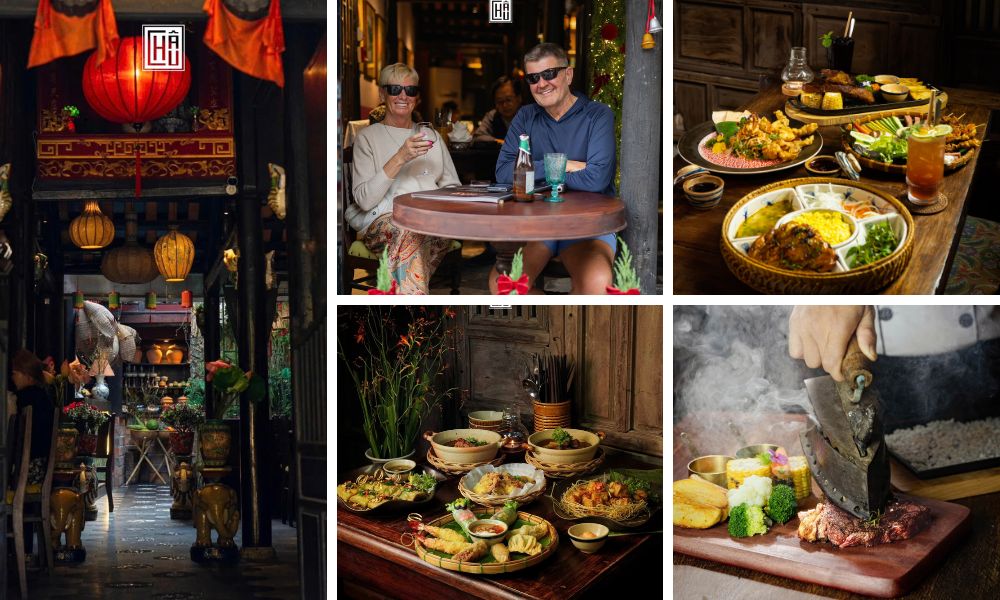
Figure 5. Chau Kitchen & Bar – the best restaurant in Hoi An, highly rated by international tourists.
The latest ticket prices and visitor information for the Chaozhou Assembly Hall.
If you’re planning a trip to the Old Town and want to know how much the entrance fee to the Trieu Chau Assembly Hall is, and whether you need to buy a separate ticket, the answer is quite simple. Like many other historical sites in the Old Town, the Trieu Chau Assembly Hall is part of the Hoi An Heritage Ticket system. This makes it easy for visitors to incorporate the assembly hall into their itinerary of exploring historical sites without having to buy separate tickets for each location.
Knowing the ticket prices, opening hours, and visiting regulations will make your trip more convenient and ensure a complete experience when exploring this special spiritual space.
Updated entrance fee prices for the Chaozhou Assembly Hall.
Currently, the Trieu Chau Assembly Hall uses the same ticket as the Hoi An Old Town entrance ticket. Visitors only need to purchase a Hoi An Old Town entrance ticket to use it for visiting the assembly hall.
The current entrance fees for Hoi An Ancient Town are as follows:
- Vietnamese customers: approximately 80,000 VND per ticket
- International visitors: approximately 120,000 VND per ticket
Each ticket allows visitors to choose to visit 3 historical sites from the list provided in the Old Town. The Chaozhou Assembly Hall is one of the sites included in this system. Some other places you can choose to visit include:
- Phuc Kien (Fujian) Assembly Hall: A masterpiece of Chinese architecture in the heart of Hoi An
- Cantonese Assembly Hall – History, architecture, and spiritual value spanning over 100 years
- Tan Ky Old House – A heritage site over 200 years old in the heart of Hoi An ancient town
- Discover Phung Hung Ancient House: A cultural heritage site over 240 years old in Hoi An
- Quan Thang Ancient House: A masterpiece of architecture over 300 years old in Hoi An.
- Duc An Ancient House – A witness to the patriotic spirit of the people of Quang Nam
This means that once you have a ticket to visit the Old Town, you don’t need to buy a separate ticket to enter the assembly hall.
Does the entrance ticket to the Old Town include a visit to the Hoi An Trieu Chau Assembly Hall?
The answer is yes. The Chaozhou Assembly Hall is part of the system of Chinese assembly halls within the Hoi An ancient town complex, and is subject to entrance ticket control.
When purchasing tickets at official ticket counters in the Old Town, visitors can choose the Chaozhou Assembly Hall as a stop on their heritage tour. This allows visitors to easily combine visits to multiple ancient architectural structures within a single walking route.
Thanks to its convenient location, the assembly hall is often combined with nearby attractions such as old houses, temples, and other Chinese assembly halls. From this location, visitors can easily combine sightseeing with other activities famous tourist attractions in Hoi An just a short walk away.
Opening hours of the Chaozhou Assembly Hall
The Chaozhou Assembly Hall is open to visitors daily, following the same hours as many other historical sites in the Old Town. It usually runs from around 7:30 AM to 5:00 PM each day.
This time slot makes it easy for tourists to visit the assembly hall as part of their Old Town tour itinerary. Morning or early afternoon is usually when the atmosphere is quiet and the light is beautiful, making it ideal for exploring the architecture and taking photos.
Notes when visiting the Trieu Chau Assembly Hall in Hoi An
When visiting the Chaozhou Assembly Hall, tourists should maintain a respectful attitude because it is not only a tourist attraction but also a place of religious worship for the Chinese community.
Visitors should purchase tickets at official ticket counters to ensure their right to visit. Tickets should be kept throughout the trip as staff may check them at historical sites.
In addition, moving gently, avoiding touching the artifacts, and maintaining order within the hall’s premises are also important considerations.
Rules for entering the worship area
The main hall of the Chaozhou Assembly Hall is a sacred worship area, so there are certain regulations for visitors.
Visitors should dress respectfully when entering the sacred area and refrain from speaking loudly. Photography is generally permitted in some areas, but avoid using flash or anything that might disrupt religious ceremonies.
Adherence to these regulations not only demonstrates respect for the spiritual space but also contributes to preserving the cultural value of the Trieu Chau Assembly Hall within the Hoi An Ancient Town heritage complex.
Interesting and little-known details about the Chaozhou Assembly Hall.
When visiting the Teochew Assembly Hall, many tourists often only admire the overall ancient architecture without discovering the subtle details hidden within the building. In reality, the assembly hall is not only a sacred place of worship but also a space preserving many unique artistic and cultural values of the Teochew Chinese community in Hoi An.
From feng shui symbols in the architecture and folk tales depicted on the ceramic roofs to ancient artifacts preserved through generations, every detail at the assembly hall contributes to telling a part of the history of the Chinese community at the ancient Hoi An trading port.
Feng Shui symbols in the architecture of the Chaozhou Assembly Hall.
The architecture of the Chaozhou Assembly Hall is designed according to many traditional Chinese feng shui principles. These elements not only have aesthetic significance but also reflect the concept of harmony between humans and the environment.
The spatial layout, from the entrance gate and courtyard to the main hall, is arranged along a straight axis, creating a sense of balance and solemnity. This arrangement helps to guide the flow of positive energy into the building, according to East Asian feng shui principles.
Additionally, mascots such as dragons, phoenixes, or auspicious motifs appear in many decorative details. These symbols represent prosperity, good fortune, and protection for the community.
Folk tales on ceramic roofs
A distinctive feature of the Teochew Assembly Hall’s architecture is the system of decorative ceramics on the roof. Upon closer observation, visitors will notice many small, vividly sculpted figures.
These ceramic sculptures often depict familiar folk tales from Chinese culture. Characters, mascots, and scenes of daily life are rendered in colored ceramics, creating a vibrant picture on the roof of the building.
This is a distinctive decorative style of Teochew architecture and is also one of the factors that makes the Teochew Assembly Hall different from many other assembly halls in Hoi An.
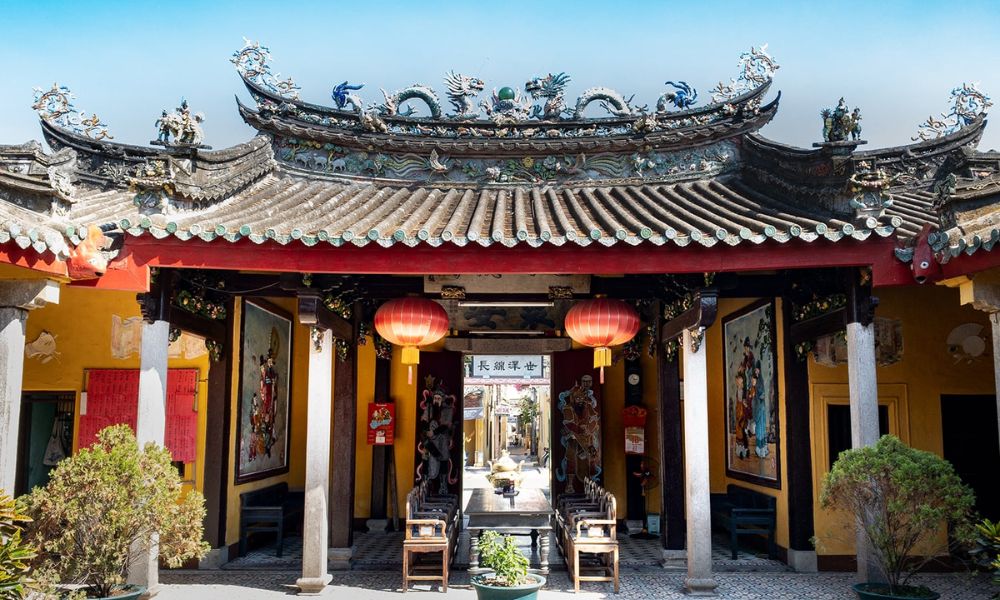
Figure 6. Ceramic roof and feng shui elements at the assembly hall.
Precious artifacts in the Chaozhou Assembly Hall
Inside the assembly hall, visitors can find many ancient artifacts of historical and cultural value. These items are often associated with the religious beliefs and community life of the Teochew Chinese.
The gilded and lacquered horizontal and vertical plaques hanging in the main hall express a philosophy of life and blessings for the community. Many religious artifacts made of wood, bronze, or ceramic have been preserved through generations and are still used in traditional ceremonies.
These artifacts help visitors gain a better understanding of the spiritual life of the Chinese community in Hoi An over the centuries.
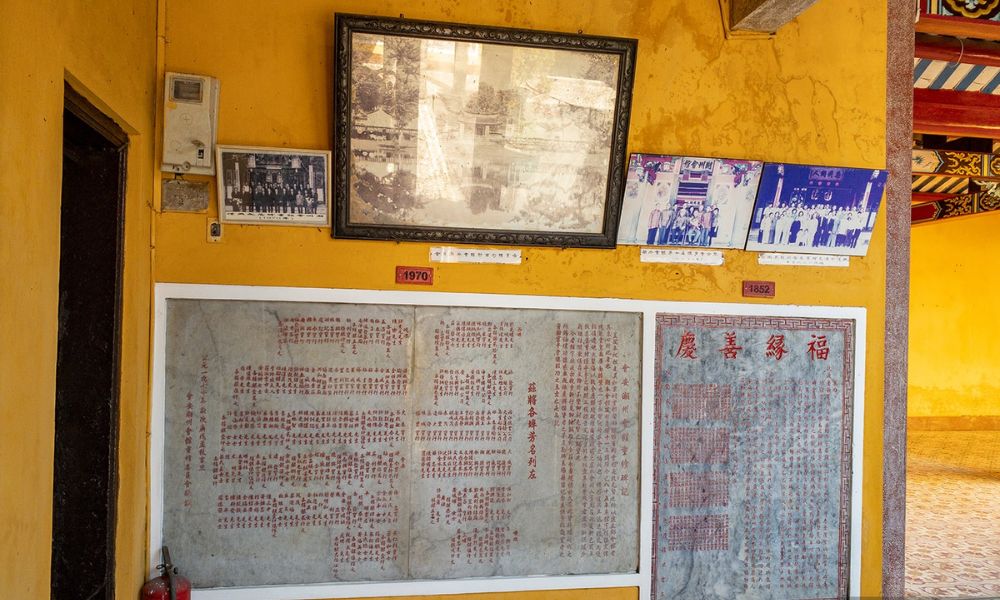
Figure 7. Artifacts inside the assembly hall.
The role of the Trieu Chau Assembly Hall in Hoi An in community life.
More than just an ancient architectural structure, the Chaozhou Assembly Hall plays an important role in the life of the Chinese community in Hoi An.
In the past, this was a meeting place for merchants and Teochew residents to exchange trade information and organize community activities. The assembly hall was also the venue for many important religious ceremonies, helping to maintain the cultural identity of the Chinese community.
Today, although its economic role is no longer what it once was, the assembly hall remains an important cultural symbol and a repository of memories for the Chinese community in the old town.
The unique architectural features of the Chaozhou Assembly Hall.
If visitors take the time to observe carefully, they will discover many unique architectural features within the Chaozhou Assembly Hall.
Ancient wooden columns with delicate carvings, traditional wooden doors, and antique tiled roofs create a space that is both classic and harmonious. Natural light from the courtyard illuminates the interior, highlighting the architectural details.
These small corners offer a fascinating experience for visitors, especially those who appreciate ancient architecture and want to delve deeper into the traditional construction art of the Chinese community in Hoi An. After exploring the ancient buildings in the old town, many visitors choose to stop at rooftop cafes in Hoi An to admire the panoramic view of the moss-covered tiled roofs from above.
Experience visiting the Trieu Chau Assembly Hall in Hoi An.
If you’re planning to explore the Chinese assembly halls in the Old Quarter, having some tips for visiting the Chaozhou Assembly Hall beforehand will make your trip more fulfilling. Unlike other crowded check-in spots, the Chaozhou Assembly Hall has a tranquil and sacred atmosphere, so the way you visit should be gentle and slow to fully appreciate the cultural value of the building.
Choosing the right time, knowing the best photo spots, and understanding the rules for entering sacred spaces will help visitors have an enjoyable experience while showing respect for the historical site. After exploring the old town during the day, many tourists also combine their trip with a visit to the beach for relaxation at beach bars in Hoi An, a place that offers a completely different atmosphere compared to the heritage space.
The best time to visit the Chaozhou Assembly Hall.
The ideal time to visit the Chaozhou Assembly Hall is usually early morning or early afternoon. At these times, the old town is not too crowded, and the assembly hall retains its characteristic tranquility.
The morning light shining through the courtyard and the ancient tiled roof creates beautiful patches of light on the wooden details and old walls. This is also an ideal time to clearly observe the architectural and decorative details within the assembly hall.
Late afternoon is also a pleasant time to visit. The temperature is milder and the atmosphere in the old town becomes more relaxed, perfect for those who want to experience the cultural space in a leisurely manner. After your sightseeing tour, you can stroll around the old town and enjoy Hoi An food is famous at long-standing local restaurants.
Beautiful photo spots at the Trieu Chau Assembly Hall in Hoi An.
Although not the largest assembly hall in Hoi An, the Trieu Chau Assembly Hall still has many beautiful architectural corners perfect for taking photos.
The entrance area is a great spot for taking photos with its vintage feel, featuring yellow walls, tiled roofs, and traditional decorative details. This is a favorite photo spot for many tourists because it clearly showcases the architecture of the assembly hall.
The indoor courtyard is also an ideal spot for taking photos. Natural light from above highlights the wooden columns, tiled roof, and surrounding architectural details.
Additionally, the main hall area with its ornate plaques, couplets, and ancient altars creates very distinctive photo opportunities; however, when taking pictures here, it is important to show respect for the sacred space.
Ideal time to visit
The time spent visiting the Chaozhou Assembly Hall is usually not very long. On average, visitors can spend about 15 to 30 minutes exploring the entire complex.
This amount of time is sufficient to observe the architecture, explore the worship area, and take some souvenir photos. If you enjoy architecture or want to delve into the decorative details, you can spend more time observing each area within the assembly hall.
Taking a leisurely stroll allows visitors to better appreciate the ancient atmosphere and cultural value of the site. Besides exploring historical relics, visitors can also learn more about Best Things to Do in Hoi An You Must Try in 2026 the area to make the journey of exploring the old town more enriching.
Things to note when visiting the spiritual site.
The Chaozhou Assembly Hall is not only a tourist attraction but also a sacred place of worship for the Chinese community. Therefore, visitors should maintain a respectful attitude when entering the main hall.
Dress respectfully, and avoid speaking loudly or making noise in the sacred area. When taking photos, limit the use of flash and avoid shooting too close to the altar.
Respecting these regulations not only demonstrates the civility of tourists but also contributes to preserving the spiritual value of the historical site.
Combine your visit with a tour of the historical sites near the Chaozhou Assembly Hall.
A major advantage of the Chaozhou Assembly Hall is its location right in the heart of the old town. From here, visitors can easily combine visits to many other famous landmarks on a single walking tour.
After visiting the assembly hall, you can continue exploring other old houses, Chinese assembly halls, or ancient temples in the neighborhood. Combining multiple attractions into one trip makes the journey more enriching.
Thanks to its convenient location and distinctive architectural style, the Trieu Chau Assembly Hall is always an interesting stop on a journey to explore the cultural heritage of Hoi An ancient town. After visiting the assembly hall, tourists can also continue on to visit ancient houses in Hoi An, a place that still preserves almost intact the architecture and lifestyle of the old trading port.
Chaozhou Assembly Hall – A unique cultural heritage of the Chinese community in Hoi An
Among the religious structures of the Chinese community in the Old Quarter, the Chaozhou Assembly Hall holds a very unique value. Not only is it a sacred place of worship for Ông Bổn (a revered deity), but it is also closely linked to the history of the formation and development of the Chaozhou Chinese community in the Hoi An trading port for many centuries.
Historically, the Teochew Assembly Hall is a clear testament to a merchant community that played a significant role in Hoi An’s international trade. It served as a meeting place, a center for social activities, and a venue for traditional ceremonies for Teochew Chinese settlers who had established themselves in a foreign land.
From an artistic perspective, the architecture of the Chaozhou Assembly Hall clearly reflects the traditional Chinese construction style with its exquisite decorative details. The decorative ceramics on the roof, the ancient horizontal plaques and couplets, and the wood carvings create a space that is both solemn and aesthetically rich.
Within the overall heritage of the ancient town, the Hoi An Trieu Chau Assembly Hall plays a crucial role in completing the diverse cultural picture of the ancient city. Along with other assembly halls of the Chinese community, this building clearly reflects the cultural exchange and the vibrant trading history of Hoi An in the past.
Because of these values, the Trieu Chau Assembly Hall is not just a tourist attraction but also a place that helps visitors gain a deeper understanding of the history, architecture, and religious life of the Chinese community in Hoi An. If you have the opportunity to explore the ancient town, spending time visiting the Trieu Chau Assembly Hall will provide a unique cultural experience that not every tourist attraction can offer.

Post on: 13/03/2026 19:00


