


Hoi An is not just a stopover, but a slow-motion film that transports us back to ancient memories. In the heart of the moss-covered town, choosing the most fulfilling itinerary is always a concern for many tourists. This article will provide an honest review of Hoi An tourist attractions and name the most famous places to visit in Hoi An. Let’s stroll through the sun-drenched alleyways and fully experience the essence of this heritage site.
Overview of Hoi An tourist attractions map
When looking at a map of Hoi An’s attractions, you’ll see the city is divided into four main areas. Each area has its own unique character, experience, and way of getting around.

Figure 1. Map of famous tourist attractions in Hoi An.
How many main tourist attractions are there in Hoi An?
1. The heart of every journey is the Old Quarter.
This area is densely populated with ancient architectural structures, assembly halls, temples, old houses, and cafes and specialty food stalls.
This area is nestled within a few main streets such as Tran Phu, Nguyen Thai Hoc, and Bach Dang. You can easily walk there without needing any transportation.
Here you’ll find some notable places such as:
- Bridge Pagoda
- Fujian Assembly Hall
- Tan Ky Old House
- Hoi An Market
If you only have one day, you should spend most of your time in this area. In the morning, you should explore the architecture, and in the evening, you should stroll around, admire the lanterns, and take photos.
Ideal visit duration: 1 to 2 days.
2. An Bang Beach and Cua Dai
About 4 to 5 km from the old town is the coastal area. The two main beaches are An Bang and Cua Dai.
An Bang beach is quiet, clean, and has many attractions Hoi An beach bar. The style is gentle. The main gate is wider and more spacious, but some sections are currently eroded.
This area is suitable if you want:
- Vacation
- Watching the sunrise
- Eating seafood
- Stay at a seaside resort or homestay.
Travel time from the Old Quarter: 10 to 15 minutes by motorbike or taxi.
Ideal visit duration: half a day to a full day.
3. Traditional craft villages and surrounding rural areas
On a map of Hoi An attractions, you’ll see many points scattered around the center, usually 3 to 7 km from the old town.
Notable villages include:
- Tra Que Vegetable Village
- Thanh Ha pottery village
- Bay Mau Coconut Forest
- Kim Bong Woodworking Village
This area is for those who enjoy experiencing local life, cycling through the fields, participating in farming, pottery making, or rowing a basket boat.
Reasonable visit time: half a day to a full day for each cluster.
4. Cham Island
On the map, you will see that Cham Island is located separately offshore, about 15 km from the mainland.
To get there, you have to go to Cua Dai port, then take a speedboat for about 20 minutes.
This place is suitable if you want:
- Snorkeling to see coral reefs
- Go to the pristine beach.
- Experience nature with less tourism.
- Ideal visit duration: 1 day or 1 night stay.
Note: You should check the weather before you go, as rough seas will cause the canoe to stop.
How to read a map of Hoi An attractions
Many people open Google Maps but still can’t visualize the optimal itinerary. Here’s how I usually plan.
Clustered
This is the most important principle.
Don’t try to go to the Old Quarter in the morning, head to the beach at noon, return to the craft village in the afternoon, and then go back to the Old Quarter in the evening. You’ll waste a lot of time traveling and get tired.
Instead:
- Day 1: Everyone gathers in the Old Quarter.
- Day 2 (morning): Traditional craft village – Day 2 (afternoon): Beach
- Day 3: Cham Island
Traveling in groups saves energy and optimizes the experience.
Travel distance
From the Old Quarter:
- Distance to the sea: 4 to 5 km
- To Tra Que vegetable village: approximately 3 km
- To Thanh Ha pottery village: approximately 4 km
- To the port for the trip to Cu Lao Cham: approximately 6 km
Hoi An is quite small, so renting a motorbike or bicycle is the most convenient option. If you’re traveling with a family group including elderly people, taxis or electric vehicles are a more comfortable choice.
In the summer, especially during the event Da Nang International Fireworks Festival 2026 – DIFF 2026, many tourists choose to stay in Hoi An and then travel to Da Nang in the evening to combine visiting both destinations in one trip.
Hoi An isn’t a place to rush. It’s a place to slow down, sit in a cafe watching the people go by, listen to the morning street vendors’ calls, and feel the gentle pace of life.
The most outstanding attractions in Hoi An Ancient Town that you shouldn’t miss.
If you’re looking for places to visit in Hoi An Ancient Town to create a detailed itinerary, this is the most complete and practical list for you. This article will help you know where to go first, what the best time to visit is, and how to combine places to avoid wasting time traveling around aimlessly.
Hoi An Old Town isn’t very large, but its historical value is immense. Visiting in the wrong order or at the wrong time when it’s crowded can significantly diminish the experience. I’ve returned to Hoi An many times and realized that understanding each attraction thoroughly makes the trip more meaningful, going beyond simply taking photos.
Below are the most important attractions in Hoi An Old Town, along with an analysis of their historical value and practical experiences.
The most outstanding tourist attractions in Hoi An Old Town.
Japanese Bridge – A symbol of the Old Quarter
When mentioning tourist attractions in Hoi An, almost everyone immediately thinks of the Japanese Bridge.
The Japanese Bridge (Chùa Cầu) was built in the late 16th century by the Japanese merchant community living in Hoi An at that time. This structure served both as a bridge connecting two neighborhoods and as a place of worship with spiritual significance.
Its historical value lies in the cultural exchange between Vietnam, Japan, and China. The curved roof architecture and the statues of dogs and monkeys at both ends of the bridge each carry their own symbolism linked to local legends.
The best time to visit is early in the morning before 8 a.m. when there are fewer visitors. In the evening, the lanterns create a beautiful scene, but it will be more crowded.
You should combine a visit to the Japanese Bridge with a trip along Tran Phu and Nguyen Thai Hoc streets, as all the highlights are within a few minutes’ walk.

Figure 2. Japanese Bridge, Hoi An
Tan Ky Ancient House – A blend of East Asian and Asian architecture.
Tan Ky Old House is one of the ancient houses that has been preserved almost intact for over 200 years.
The unique feature of this old house is the combination of Vietnamese, Chinese, and Japanese architecture. The facade is in the typical tube-house style of the old town, with an intricately carved wooden frame, and the back opens onto the Hoai River, facilitating trade in the past.
Upon entering, you’ll feel a cool, refreshing atmosphere despite the scorching sun outside. This is a very clever design adapted to the climate of Central Vietnam.
The historical value of the old house lies not only in its architecture but also in the story of Hoi An’s trading port in the 17th century. The homeowner’s family has lived and preserved this place for many generations.
The best time to visit is in the morning or early afternoon when it’s not too crowded.
You can combine Tan Ky Ancient House with the Japanese Bridge as they are only a few minutes’ walk apart.
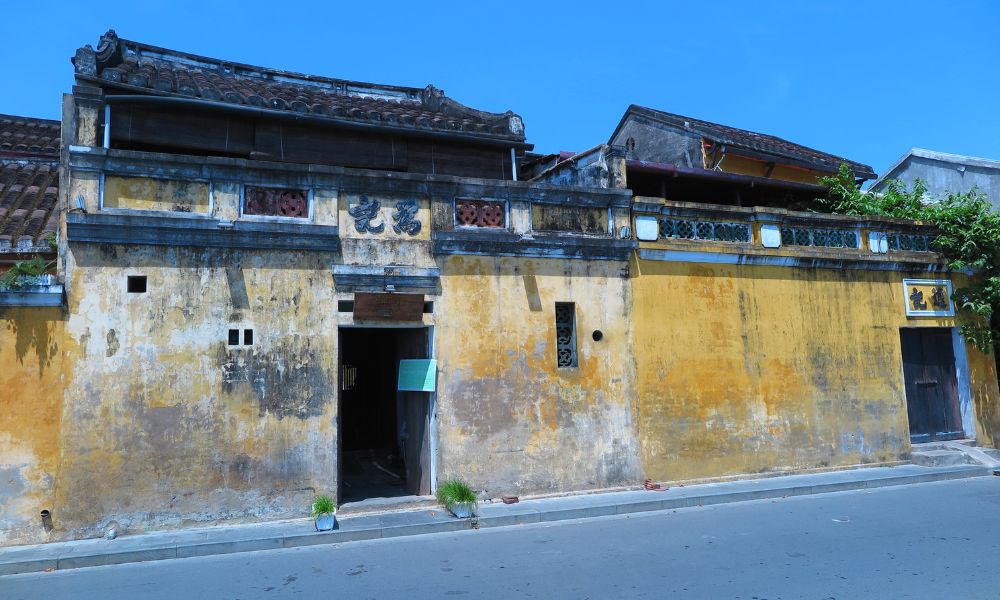
Figure 3. Tan Ky Old House
Fujian Assembly Hall – A distinctive religious building
The Fujian Assembly Hall is a place of worship dedicated to the Goddess Tian Hou by the Fujian Chinese community.
Right from the entrance, you’ll be impressed by the distinctive red color, dragon and phoenix motifs, and spacious interior. Inside, the intricately carved altars and the large incense rings hanging from the ceiling create a truly unique scene.
The historical value of the assembly hall lies in its role in connecting the community of Chinese merchants when Hoi An was an international trading port.
The best time to visit is in the morning because the sunlight shining on the courtyard creates a beautiful effect. If you go on the full moon day, you can feel the religious atmosphere more clearly.
The Fujian Assembly Hall is located on Tran Phu Street, conveniently situated next to the Tan Ky Ancient House and other assembly halls along the same route.
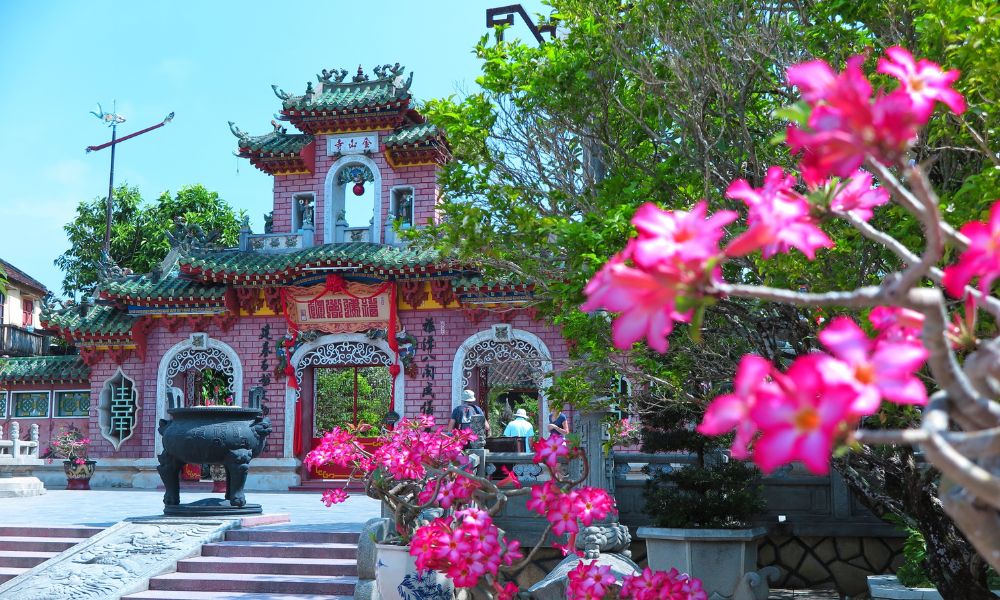
Figure 4. Fujian Assembly Hall
Sa Huynh Cultural Museum
If you want to gain a deeper understanding of the history of this region, the Sa Huynh Cultural Museum is a must-visit.
This place displays hundreds of artifacts from the Sa Huynh culture dating back more than 2000 years. The artifacts include pottery, jewelry, tools, and burial jar sites.
The historical significance here helps you understand that Hoi An is not just a 16th-century trading port, but also has a much longer history.
A visit of about 30 to 45 minutes is sufficient to see all the main exhibits.
You should visit the museum at midday or early afternoon if you want to avoid the sun.
Hoi An Market – Experiencing Local Life
Hoi An Market is where you can truly experience the authentic rhythm of local life.
The busiest time is from 6 to 9 a.m. The stalls sell vegetables, seafood, spices, and local specialties such as cao lầu and Quang noodles.
The market’s value lies not in its architecture but in the experience of daily life. If you want to truly understand Hoi An, spend time having breakfast here instead of just stopping by to take photos.
The market is located near the Hoai River, making it very convenient to visit both places in the same morning.
If you want to explore further about Hoi An food to truly experience the local cuisine and eat daily, rather than just the famous dishes, you should spend extra time exploring the smaller food areas around the market and along the riverbank.

Figure 5. Hoi An Market
Hoai River – Lantern Street at Night
At sunset, the Hoai River area becomes the most beautiful spot in the old town.
The riverbanks are illuminated by twinkling lanterns. Tourists can release floating lanterns or take short boat trips on the river to admire the panoramic view of the old town.
The Hoai River’s unique value lies in its cultural space. It is not only a beautiful landscape but also a reflection of the bustling trading port of the past.
The best time is from 6:30 PM to 8:30 PM. After 9 PM, the number of customers decreases and the atmosphere becomes quieter.
You should spend the entire evening in this area, combining dinner with a stroll.
The attractions in Hoi An are worth experiencing in depth, not just checking in for photos.
The key when visiting the attractions in Hoi An Ancient Town is to take the time to observe and listen to the story behind each structure. Because alongside the architecture and history, Hoi An cuisine is also an important part of understanding the life of the old trading port through the ingredients, spices, and cultural exchange in each dish.
Hoi An is not a place to rush through. Every house, every tiled roof, holds the history of a once bustling international trading port, one of the most prosperous in Southeast Asia. If you have enough time, return to the same location at two different times of day. You’ll see that the old town has two completely different atmospheres at night and in the morning. Hopefully, this article has helped you understand which places to prioritize in Hoi An and how to plan your trip effectively so that it’s not only beautiful but also enriching.
If you want the trip to be truly slow and fulfilling, you can allocate extra time for an afternoon Hoi An Spa to relax after having walked quite a bit in the old town.
Tourist attractions in Hoi An near the sea
If you’re looking for places to visit in Hoi An near the beach where you can relax and explore at the same time, this article will help you choose the right area, the right time, and a style that suits your vacation preferences.
Many people planning a trip to Hoi An often only think of the Old Town. However, in reality, the coastal area, just 10 to 15 minutes from the center, offers a much more balanced experience. Enjoy the sea in the morning, explore the Old Town in the afternoon, and stroll through the lantern-lit streets in the evening. This rhythm prevents the trip from feeling overwhelming.
An Bang Beach
An Bang Beach is the most popular choice for tourists who want to combine relaxation and exploring Hoi An.
An Bang beach is only about 4 to 5 km from the center of the old town. If you travel by motorbike or taxi, the journey takes about 10 to 15 minutes. The road is quite easy and flat.
My first impression upon arriving at An Bang Beach was its spaciousness, fine sand, and lack of crowds compared to many other famous beaches in Central Vietnam. Despite the considerable number of international tourists, the atmosphere remained relaxed.
A major advantage of An Bang is its system of homestays, villas, and boutique resorts located right by the sea. Many places are just a few steps from the sandy beach. In the morning, you can open your room door and walk to the beach to watch the sunrise – it’s very convenient.

Figure 6. A view of An Bang beach.
Suitable activities here include:
- Swimming in the sea
- Vacation
- Sitting in a cafe overlooking the sea.
- Eat Hoi An seafood
- Taking photos at sunset.
In my personal experience, the best time to visit An Bang beach is from 5:30 to 7:00 AM. The sea is clear, there are fewer people, and the sunlight is gentle. The afternoon, from 4:30 PM onwards, is also very beautiful.
If you visit during the peak summer season, you should avoid midday hours because the sun in Central Vietnam is quite intense.
Cua Dai Beach
Cua Dai Beach is located a little further from the town center, about 5 to 6 km away. In the past, Cua Dai was the most famous and bustling beach in Hoi An.
In recent years, some areas have experienced erosion due to natural changes. However, many large resorts have reinforced their beaches and preserved their private, rather beautiful areas.
Cua Dai’s strength lies in its spacious and airy environment. If you’re looking for a relaxing resort experience in a secluded area with minimal noise, this is a suitable option.
Suitable activities at Cua Dai:
- Relax at the resort.
- Take a walk along the long beach.
- Enjoy seafood at a seaside restaurant.
- Watching the sunrise
Compared to An Bang, Cua Dai is somewhat quieter if you choose the right area. However, if you want more cafes, beach bars, and a youthful atmosphere, An Bang would be a better fit.
Comparing An Bang Beach and Cua Dai Beach
To help you choose, here’s a practical comparison based on our experience with multiple stays.
Regarding location: Both are about 10 to 15 minutes by car from the Old Town. An Bang is closer to smaller homestays and residential areas. Cua Dai is closer to larger resorts.
Regarding the air
- An Bang is more vibrant, with many foreign tourists and beach bars.
- Cua Dai is calmer, making it suitable for a peaceful retreat.
Regarding the landscape:
- An Bang boasts fine sand and an open, easily accessible environment.
- Cửa Đại is wider now, but some sections have narrowed due to erosion.
Regarding the overall experience
- If you like a chill style, coffee, beach bars, and a youthful atmosphere, choose An Bang.
- If you prefer a private resort getaway, Cua Dai would be a better choice.
Beach cafes and bars
An important aspect when mentioning tourist attractions in Hoi An near the beach is the system of beachfront cafes and bars, especially concentrated in An Bang.
In the afternoon, many cafes play soft music, set up lounge chairs right on the sand, and serve cocktails, juices, and fresh seafood. The atmosphere is quite pleasant, not too noisy.
You could spend an afternoon just doing:
- Sitting and reading a book by the sea.
- Working remotely
- Watching the sunset
- Meet up with friends.
If you’re traveling with a group of friends, a beach bar is the perfect place to end a day exploring the old town.
If you love the sea and want to avoid the crowds in the city center, choosing accommodation near the beach will make for a much more relaxing experience. Among the attractions in Hoi An, the coastal area offers the most distinctly relaxing feeling. The old town exudes history and culture, while the sea provides balance and rest.
When searching for tourist attractions in Hoi An, many people immediately think of the old town and the beach. But if you want to understand the local culture in depth, the traditional craft villages are the true “soul” of this land.
The tourist attractions in Hoi An offer experiential tours of traditional crafts.
When searching for tourist attractions in Hoi An, many people immediately think of the ancient town and the beach. But if you want to deeply understand the local culture, the traditional craft villages are the true “soul” of this land. The craft villages in Hoi An weren’t built solely for tourism; they are places where people still live, produce, and preserve their crafts for generations. Therefore, the experience here is not just about sightseeing, but also about directly engaging with the local way of life.
Here are four of the best places to experience traditional craft villages that are worth spending time at.

Figure 7. Some typical traditional craft villages in Hoi An.
Thanh Ha pottery village
Thanh Ha pottery village is located about 3 km west of the Old Quarter. It only takes about 10 minutes to get there by motorbike or bicycle.
This craft village has existed for over 500 years, once supplying pottery to the thriving Hoi An trading port. Interestingly, the people here still maintain traditional handcrafted pottery-making methods, without using electric potters.
Practical experiences here typically include:
- Watch the artisan shape the pottery by hand.
- Learn to make pottery with guidance.
- Visit the terracotta park.
The feeling of shaping clay into a small cup with your own hands is quite enjoyable, especially for children. Many families with young children often choose this activity because it is both fun and educational.
Recommended time: approximately 1.5 to 2 hours.
Morning is the best time because the air is cool and there are fewer tour groups.
Tra Que Vegetable Village
Tra Que Vegetable Village is located about 3 km from the Old Town, near An Bang beach. This village specializes in growing organic vegetables to supply restaurants in Hoi An.
What makes Tra Que special is its traditional farming method, using seaweed from the river as fertilizer instead of chemicals. As a result, the vegetables have a richer and fresher flavor.
Popular experiences here include:
- Wearing farmer’s clothes
- Watering vegetables using traditional carrying poles.
- Learn how to grow and harvest vegetables.
- Join a cooking class using ingredients from the garden.
The atmosphere in Tra Que is very peaceful. Cycling through the fields in the morning, listening to the wind and smelling the fresh vegetables, creates a relaxing feeling that is completely different from the bustling old town.
This place is especially suitable for families with young children because the kids can learn how to plant trees and learn more about sustainable agriculture.
Recommended time: approximately 2 to 3 hours if combined with a cooking class.
It’s best to go in the early morning or late afternoon.
Kim Bong Woodworking Village
Kim Bong carpentry village is located across the Thu Bon River, about 5 km from the Old Quarter. You can get there by road or combine it with a boat trip for a different experience.
This carpentry village has been famous since the 16th century, having participated in the construction of many buildings in the Old Quarter and the palaces of the Nguyen Dynasty.
What’s striking about visiting is the sound of chisels and saws emanating from the small workshops. The craftsmen here still work in traditional ways, hand-carving wood.
The experience in Kim Bong isn’t as bustling as in Thanh Ha or Tra Que, but it offers a distinct cultural depth. You can observe the woodworking process, learn about nailless wood joining techniques, and hear stories about the village’s history.
This place is suitable for those who love architecture, crafts, and families with slightly older children.
Recommended time: approximately 1.5 to 2 hours.
Bay Mau Coconut Forest
The Bay Mau coconut forest is located in Cam Thanh commune, about 4 to 5 km from the town center. It is a wetland ecosystem with an extensive system of mangrove trees.
The most memorable activity is taking a basket boat ride through the coconut groves. The boatmen are usually locals who demonstrate their basket-spinning skills and sing songs, creating a lively atmosphere.
The experience here is more about entertainment than learning about traditional crafts, but it still reflects the life of the people living in the riverine region.
Children usually love this activity because they get to sit in a boat, watch performances, and try catching small crabs in the coconut grove.
Recommended time: approximately 1 to 1.5 hours.
It’s best to go in the morning or after 4 PM to avoid the harsh sun.
Among all the attractions in Hoi An, the craft villages offer a completely different perspective compared to the old town and the beach. This is where you’ll understand that Hoi An is not just a beautiful place for photography, but also a land with a rich cultural and historical heritage.
Are the tourist attractions in Hoi An outside the mainland – Cham Island – worth a day trip?
If you’re looking for places to visit in Hoi An outside the Old Town and wondering if a day trip to Cham Island is a good idea, the short answer is: yes, if you love the sea, appreciate nature, and plan your itinerary carefully.
Cu Lao Cham is an archipelago located about 15 km from the mainland, belonging to Tan Hiep island commune. It takes about 15 to 20 minutes by speedboat from Cua Dai port to reach it. This is a UNESCO World Biosphere Reserve, notable for its clear waters, coral reefs, and relatively pristine ecosystem.
In the overall map of Hoi An’s attractions, Cham Island is the furthest point but also offers a completely different experience compared to the Old Town or An Bang Beach.
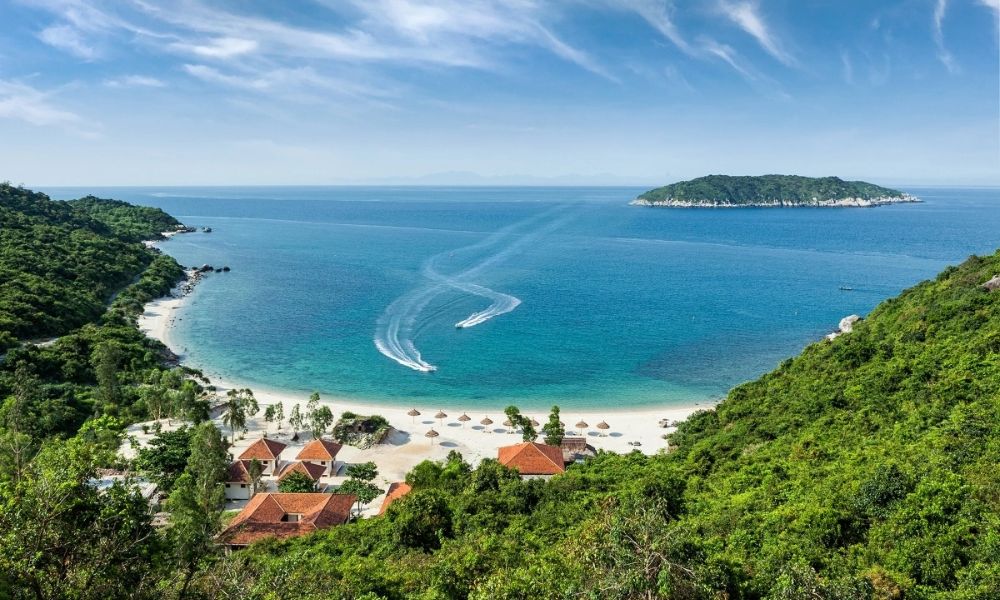
Figure 8. Cham Island
What does Cham Island have to offer?
Visiting Cham Island is more than just swimming. If you only think about the beach, you’ll miss out on many other interesting things.
1. Snorkeling: This is the most outstanding activity. The seawater at Cu Lao Cham is quite clear during the season, allowing you to clearly see coral and small fish while snorkeling.
2. Bai Chong and Bai Ong
- Bai Ong is the main gathering area when canoes dock. It has restaurants, changing rooms, and tourist services.
- Bai Chong is quieter, has clearer water, and is less crowded on weekdays. Many group tours include lunch here.
3. Hai Tang Pagoda
- Hai Tang Pagoda , built in 1758, is a prominent spiritual landmark on the island.
- The temple, nestled between mountains and the sea, boasts a simple yet historically significant architecture. It was once a place where fishermen and merchants came to pray for safety before setting sail.
4. Ancient Cham wells
- Ancient Cham wells, dating back hundreds of years, are believed to be associated with the ancient Cham Pa people.
- What’s remarkable is that the well never runs dry, even though it’s located on an island. Local people believe the water here brings good luck.
It’s not advisable to schedule a visit to Cham Island in the morning followed by a packed afternoon of sightseeing in the Old Town, as you’ll likely be quite tired after the beach and speedboat trips. In the list of attractions in Hoi An, Cham Island serves as a complementary natural experience, balancing culture and the sea. If your goal is relaxation combined with exploration, Cham Island is a worthwhile destination to consider if you have enough time and visit during the right season.
Things you should know before visiting Hoi An for the first time.
If this is your first time in Hoi An and you’re looking for practical tips to avoid feeling lost, this section will directly answer the most important questions: should you buy a ticket to visit the old town, should you walk or cycle, what is the best time to visit, and what should you be aware of regarding the weather?
Hoi An isn’t very big, but how you experience it will determine whether your trip is comfortable or tiring. Many first-time visitors tend to go on impulse, leading to missing important sights or arriving during peak hours. By doing some research beforehand, you’ll be able to fully enjoy Hoi An’s attractions without being overwhelmed.
Should you buy a ticket to visit the Old Town?
The answer is yes, if you want to go inside and explore the architectural structures.
Hoi An Old Town allows free walking without a ticket. However, to enter attractions such as ancient houses, assembly halls, and museums, you need to purchase a package ticket. This ticket allows you to select certain attractions from a specified list.
If you’re just strolling around, taking photos, and eating, buying a ticket isn’t mandatory. However, if it’s your first time in Hoi An, you should buy one to enter at least one ancient house and one assembly hall. This is a way to better understand the history of the trading port and the blend of East Asian architecture.
Based on my experience, the ticket price is not high compared to the value received. More importantly, the ticket money contributes to the preservation of the heritage.
Walking or cycling?
In the old town, walking is the best option.
During the day, there are restrictions on motorized vehicles during certain hours. In the evening, it’s almost entirely pedestrian-only. The narrow streets, old rooftops, and closely packed cafes make it difficult to appreciate the characteristic slow pace of life if you’re traveling by vehicle.
If you stay near the city center, you can walk the entire way around in a single day.
Bicycles are suitable when:
- You live far from the old town.
- Want to explore Tra Que vegetable village?
- I want to cycle to An Bang beach.
Hoi An has relatively flat terrain, so cycling isn’t too tiring. Early mornings or late afternoons are the best times to cycle through the fields.
Motorbikes should only be used for longer distances, such as to Thanh Ha pottery village or to Cua Dai port.
The best time of day to visit.
Hoi An has two most beautiful times of day.
Morning hours from 6 am to 9 am: The Old Quarter is still quiet and less crowded. The sunlight is gentle, and the air is cool. This is the best time to take beautiful photos and comfortably explore the architectural structures.
Evening from 6:30 PM to 8:30 PM: Lanterns are lit, and the Hoai River shimmers. The atmosphere is lively but still retains its unique character. If you want to admire the entire old town from above instead of at ground level, you can try additional experiences Rooftop cafes in Hoi An, a place that offers a very different perspective of moss-covered tiled roofs when the lights come on.
The midday sun is often intense, especially from April to August. During this time, it’s better to rest, have lunch, or visit a museum instead of walking outdoors for too long.
Weather tips for visiting Hoi An
The weather greatly affects the experience.
From March to August is the dry season. The weather is sunny and the sea is clear, making it ideal for sightseeing and visiting Cham Island. However, the sun in Central Vietnam is quite strong, so it’s advisable to bring a hat, sunglasses, and drinking water.
From September to November is the rainy season. Hoi An can experience heavy rain and even localized flooding. If you plan to visit during this time, you should monitor the weather forecast and prepare accordingly.
From December to February, the weather is cooler, sometimes chilly in the evenings. This is a pleasant time for walking.
See details: HOI AN WEATHER: Detailed guide to the best month to travel to Hoi An
Other practical considerations
- Don’t cram too much information into one day. The Old Quarter needs time to truly appreciate, not just to take photos.
- You should try having breakfast at Hoi An market or a local eatery instead of just choosing a tourist restaurant.
- Wear comfortable shoes because you’ll be doing a lot of walking.
- Maintain a sense of heritage preservation when visiting ancient structures.
With this preparation, exploring the attractions in Hoi An will be more relaxed and insightful, rather than just a hurried journey through the famous spots.
And after a day of strolling around, visiting heritage sites, or exploring the islands depending on the season, choosing the right place for dinner will make the trip even more fulfilling. Chau Kitchen & Bar is one of thebest restaurant in Hoi An, highly rated by international tourists, it’s especially suitable for staying overnight and enjoying the evening in the charming atmosphere of the old town.
Located in a more than 100-year-old house in the city center, Chau offers a warm atmosphere with yellow walls, wooden furniture, and soft lantern lighting, creating a space that is both classic and romantic. It’s a standout Asian-European fusion restaurant where Western cuisine is subtly combined with East Asian inspiration and local ingredients. Iron Beefsteak Hoi An renowned for its premium beef, cooked on a sizzling cast-iron griddle, resulting in tender, juicy, and flavorful meats – a favorite choice among many diners. In addition, the diverse Asian-European menu, featuring pasta, seafood, salads, and modern variations of Hoi An dishes, caters to a wide range of tastes.
The restaurant boasts a spacious and flexible setting, suitable for solo diners, couples, and large groups. In particular, the street-view seating allows you to enjoy your dinner while admiring the brightly lit ancient town during the most beautiful hours. Whether you visit Hoi An during the sunny or rainy season, an evening at Chau Kitchen & Bar is always a sophisticated choice to fully experience the rhythm and flavors of this heritage land.
- Address: 141 Tran Phu, Minh An Ward, Hoi An Ancient Town
- Phone: 0903529377
- Opening hours: 08:30 – 22:30
- Website: https://chaukitchenandbar.vn/en/homepage/
- Facebook: https://www.facebook.com/Chaukitchenhoian
- You can book a table directly through the website: Reservation
- Rating on Google Map: 4.8/5.0
- TripAdvisor Rating: 4.8/5.0

Figure 9. Chau Kitchen & Bar – one of the best restaurants in Hoi An, highly rated by international tourists.
The tourist attractions in Hoi An are suitable for different groups of travelers.
If you’re looking for places to visit in Hoi An that suit your group, this section will help you choose the right experience instead of following a general list. Hoi An isn’t just one type of travel destination. Depending on whether you’re traveling with family, your significant other, or a group of photography enthusiasts, the itinerary will be completely different.
Below are detailed suggestions for each group, based on real-world experience and the characteristics of each area.
Where should families with young children go?
For families with young children, the top priorities are safety, spacious environments, and experiential activities rather than excessive travel.
The most suitable options include:
- Tra Que Vegetable Village
- Thanh Ha pottery village
- Bay Mau Coconut Forest
- An Bang Beach
Tra Que Vegetable Village gives children the opportunity to experience clean agriculture, watering vegetables, and planting trees. The activities are gentle and educational. Children often enjoy dressing up as farmers and trying to work like adults.
Thanh Ha pottery village is ideal because children can create their own pottery. This experience is both fun and creates memorable moments.
The Bay Mau coconut forest is highly recreational. Children enjoy riding in basket boats, watching boat-spinning demonstrations, and trying their hand at catching small crabs.
If your family wants a relaxing vacation combined with sightseeing, you should choose accommodation near An Bang beach so you can swim in the sea in the morning and visit the ancient town in the afternoon.
In the town center, when choosing attractions in Hoi An Old Town, opt for places with open spaces such as the Japanese Bridge and the area along the Hoai River, avoiding crowded peak hours.
What experiences should the couple have?
Hoi An is one of the most romantic destinations in Central Vietnam. If you’re traveling as a couple, you should prioritize privacy and the best time of day.
The most suitable options include:
- Evening stroll through the Old Quarter
- Releasing lanterns on the Hoai River
- Riverside coffee
- An Bang beach at sunset
- Cham Island if you have a full day.
Evening is the most beautiful time for couples. The lanterns reflecting on the water create a very special atmosphere. Taking a leisurely stroll through the old town and stopping at a small cafe will bring a very different feeling compared to daytime.
If you want more privacy, you can choose to stay near the beach. Sunsets in An Bang are quite peaceful, less noisy than in the city center.
For couples who love nature, a day trip to Cu Lao Cham is also a worthwhile option to consider for a different island experience compared to the old town.
Where should photography enthusiasts focus their attention?
For photography enthusiasts, light and timing are more important than the number of locations. Many travelers combine this experience with professional services Hoi An Tailor – Get Your Suits & Evening Gowns Made in Just 24 Hours to have specific outfits that match the old town or beach concept before the photoshoot.
Some tourist attractions in Hoi An that are suitable for photography include:
- Bridge Pagoda in the early morning
- The Fujian Assembly Hall features a striking red color scheme.
- An old house with light shining through wooden doors.
- Hoai River when the lanterns are lit
- An Bang beach at dawn
Early morning, from 6 to 8 a.m., is the best time to photograph the Old Quarter. The sunlight is soft and slanted, there are fewer people, making it easy to capture the original scenery. This is also the ideal time to wear traditional clothing, and you can refer to this for inspiration Top 5+ Hoi An Ao Dai Rental Shops with the Widest Selection to prepare before going for a walk.
The evening is perfect for photos with artificial lighting and a festive atmosphere.
If you enjoy nature photography, Cham Island and An Bang beach offer expansive, unobstructed views with minimal visual clutter.
What should someone who enjoys exploring different cultures prioritize?
If your goal is to gain a deep understanding of history and culture, you should focus on architectural landmarks and traditional crafts. If you want to elevate your culinary experience during your trip, consider exploring Official List of Hoi An Restaurant Michelin.This will help you choose a high-quality dinner spot after a day of sightseeing.
Among the must-see attractions in Hoi An Ancient Town are:
- Tan Ky Old House
- Fujian Assembly Hall
- Sa Huynh Cultural Museum
These points help to better understand the international trading port of the 16th and 17th centuries, and the interaction between Vietnam, Japan, and China.
Outside the city center, you should also spend time on:
- Kim Bong Woodworking Village
- Thanh Ha pottery village
- Tra Que Vegetable Village
This place clearly showcases traditional life and crafts that have been maintained for generations. Experiencing the craft village firsthand provides a deeper insight than simply visiting the architecture.
When chosen correctly according to the travel group, Hoi An will not only be beautiful but also truly memorable.
What are the most worthwhile places to visit in Hoi An?
If you had to answer the question “What are the most worthwhile places to visit in Hoi An?” in short, the answer wouldn’t lie in a single name. The most worthwhile thing about Hoi An is the combination of culture, history, and nature all in one trip.
The tourist attractions in Hoi An are not just places to check in, take a few photos, and then leave. Each place possesses its own unique value.
The Old Town tells the story of a once bustling international trading port, the most prosperous in Southeast Asia. Attractions in Hoi An Old Town, such as ancient houses, assembly halls, the Japanese Bridge, and museums, help you understand the cultural exchange between Vietnamese, Chinese, and Japanese influences over hundreds of years.
Traditional craft villages like Thanh Ha, Tra Que, and Kim Bong tell stories of labor and the preservation of traditions through generations. They represent a living culture, not a static museum.
An Bang Beach, Cua Dai Beach, or Cham Island offer natural elements that help balance exploration and relaxation during a trip.
So instead of finding one “most worthwhile” destination, determine what you want to experience on your trip. Do you want to learn about history, live at a slower pace in the old town, immerse yourself in nature, or combine all of these?
To optimize your time and avoid unnecessary detours, it’s advisable to use a map of Hoi An’s attractions before planning your itinerary. Looking at the overall map of Hoi An’s attractions will make it easier to group areas together, logically arranging your schedule between the old town, craft villages, beaches, and islands.
The attractions in Hoi An are truly worth visiting if you take the time to appreciate them rather than just skimming through them. By walking slowly, observing carefully, and understanding the context behind each structure, Hoi An will not only be a beautiful destination but also a journey rich in depth.

Post on: 12/02/2026 17:25


