

Not far from the ancient town center, Tra Que vegetable village emerges as a lush green oasis, offering the peaceful atmosphere of a tranquil countryside. Not only famous for its traditional organic farming methods using seaweed from the De Voong lagoon, Tra Que vegetable village in Hoi An is also an ideal destination for tourists to shed their worries, transform into real farmers, and enjoy the exquisite flavors of its renowned aromatic vegetables. Let’s explore the journey from garden to table in this heritage land to understand why it captivates hearts so much.
Where is Tra Que Vegetable Village? Detailed directions from A to Z.
If you’re looking for the location of Tra Que Vegetable Village, the short answer is: Tra Que Vegetable Village is located in Cam Ha Commune, Hoi An City, Quang Nam Province, about 2.5–3 km northeast of Hoi An Ancient Town. It’s one of the oldest traditional craft villages, famous for its organically grown vegetables and also a very popular tourist destination. These kinds of experiences are often included in exploration itineraries Hoi An travel 2026, where traditional craft villages play an important role.
The following information will help you understand the exact location and the most convenient way to get to Tra Que Vegetable Village in Hoi An, especially if this is your first time visiting.

Figure 1. An aerial view of Tra Que vegetable village in Hoi An.
The exact address of Tra Que vegetable village in Hoi An.
Tra Que Vegetable Village is located in Tra Que village, Hoi An Tay ward (formerly Cam Ha commune, Hoi An).
The village’s location between two famous areas, Hoi An Ancient Town and An Bang Beach, makes it very convenient to combine visits in a single day. This also explains why many tourists choose to visit Tra Que vegetable village in the morning or afternoon, after strolling through the ancient town or before heading to the beach. From here, you can easily connect to many other famous tourist attractions in Hoi An only within a short schedule.
Distance from the Old Town to Tra Que Vegetable Village
From the center of Hoi An Old Town to Tra Que Vegetable Village, the distance is only about 2.5 to 3 km, depending on the specific starting point.
Travel time:
- By bicycle: approximately 10 to 15 minutes
- Motorbikes: approximately 5 to 10 minutes
- Taxi or tram: approximately 5 to 7 minutes
With this distance, you can easily make a day trip without complicated planning. In fact, many people choose to cycle here early in the morning to enjoy the fresh air and admire the countryside.
Directions to Tra Que Vegetable Village
Bicycler
This is the most popular mode of transportation among tourists.
From the Old Quarter, you can follow this route: Hai Ba Trung Street → turn towards An Bang Beach. After a short distance, you will see a sign directing you to Tra Que vegetable village.
This route is quite easy to navigate, with few large vehicles, and is lined with rice fields and houses on both sides, making it very pleasant. If you want to experience the true essence of Hoi An, cycling to the vegetable village is a worthwhile option.
Ride
If you need to save time or are traveling in a group, a motorbike is a more flexible option.
Popular route:
- Starting from the old town
- Follow Hai Ba Trung Street towards the sea.
- Upon reaching the area near An Bang beach, turn onto the road leading to the vegetable village.
The road is quite flat and easy to drive on, with no dangerous sections. You can park your car right at the tourist attractions in the village for a small fee.
Travel by taxi or ride-hailing service.
If you’re unfamiliar with the area or traveling with elderly family members, a taxi is the most convenient option.
Just tell the driver: “Go to Tra Que vegetable village, Cam Ha commune.”
Most drivers in Hoi An know this place because it’s a fairly popular tourist spot.
What makes Tra Que vegetable village so special that international tourists love it?
If you’re wondering what makes Tra Que vegetable village so special, the short answer is: it’s not just a vegetable-growing village, but a place that preserves traditional farming methods, creating a unique and distinctive vegetable flavor that has become an important part of Hoi An’s culinary culture. This very element is what makes the vegetable village so closely linked to the identity Hoi An cuisine where vegetables are not just ingredients but also key elements in shaping the flavor.
What makes international tourists love Tra Que vegetable village in Hoi An is not its scale or modernity, but its authenticity. You can not just “watch,” but directly participate in farming, understand how the locals grow vegetables, and clearly feel the difference from the aroma and taste of the vegetables to the way they are prepared into dishes. This “authenticity” is also a common feature of other traditional craft villages such as Kim Bong carpentry village in Hoi An, where the experience is not theatrical but directly connected to the lives of the people.
An overview of Tra Que vegetable village.
Tra Que Vegetable Village is located in Cam Ha commune, about 3 to 4 km from Hoi An ancient town. Although not very large, covering only about 40 hectares, it is one of the most famous clean vegetable growing areas in Central Vietnam.
What’s special is that the village doesn’t cultivate crops on a large scale, but rather divides them into small plots, each cared for manually. Upon entering, you’ll see a very “everyday” scene, yet one that easily makes an impression. People wear conical hats, carry water, and water the vegetables by hand. There are no noisy machines, no modern greenhouses.
It is precisely this simplicity that foreign tourists seek. A genuine, unscripted experience.
The history of the formation of Tra Que vegetable village in Hoi An.
According to locals, the Tra Que vegetable village in Hoi An has a history of over 300 years. The name “Tra Que” is also associated with an interesting story. Long ago, when the king passed through this area and tasted the vegetables, he noticed they had a fragrant aroma similar to tea and a slightly spicy taste like cinnamon, so he named it Tra Que.
Although the story is passed down orally, it somewhat accurately reflects the characteristics of the vegetables here. Unlike mass-produced vegetables, Tra Que vegetables have a very distinct aroma, especially raw herbs like mint, perilla, and coriander.
For generations, the villagers have maintained their traditional farming methods. This is a crucial factor in helping the village preserve its unique identity amidst the era of industrialized agriculture.
Traditional vegetable growing methods
The core value of Tra Que vegetable village lies in its farming methods.
The people here:
- No industrial chemicals or pesticides are used.
- Use natural organic fertilizer
- Seaweed from the Co Co River is especially used to fertilize the soil.
After being harvested, the seaweed is composted and mixed into the soil, helping to retain moisture and provide natural nutrients. This is the key secret that makes it different.
In addition, most of the processes are done by hand:
- Preparing the soil
- Sow seeds
- Watering with a bucket
Although manual cultivation is labor-intensive, it allows for better quality control. This is also why Tra Que vegetables are always highly regarded for their safety and flavor.
Why do Tra Que vegetables have such a distinctive flavor?
Many factors combine to create the unique flavor of Tra Que vegetable village in Hoi An, a flavor that cannot be replicated elsewhere.
Firstly, there’s the soil. The soil in this area is loose and retains moisture well.
Secondly, there’s the water source. The vegetables are irrigated with local well and river water, which is free from chemical contamination.
Third, and most importantly, is seaweed. It is this layer of seaweed that creates a subtle aroma, giving the vegetables a richer flavor, unlike the bland taste of industrially grown vegetables.
When eating fresh vegetables in Hoi An, you’ll easily notice the difference. The vegetables are crisp, fragrant, and have a distinct aftertaste. That’s why many local chefs always prefer using vegetables from Tra Que instead of other sources.
The role of Tra Que vegetable village in Hoi An cuisine.
Talking about Hoi An’s cuisine without mentioning Tra Que vegetable village would be incomplete.
Vegetables from this village are used in many famous dishes such as:
- Cao Lau
- Quang noodles
- Vietnamese savory pancake (Banh Xeo)
- Salads and raw vegetables are served as a side dish.
A distinctive feature of Hoi An cuisine is the balance between taste and aroma. Vegetables are not just side dishes but play a crucial role.
For example, an authentic plate of cao lầu cannot be without Tra Que fresh vegetables. If other vegetables are used instead, the flavor will be significantly diminished.
Therefore, the vegetable village is not only a production site but also the “source of flavor” for an entire local cuisine. When talking about culinary experiences, people often immediately think of the signature food Hoi An, where vegetables are an indispensable ingredient.
Tra Que vegetable village has been recognized as a typical tourist village.
Beyond its agricultural significance, Tra Que vegetable village in Hoi An has also been recognized as a model national-level tourist village.
This is no coincidence. The tourism model here is directly linked to the lives of the local people:
- Tourists participate in planting vegetables.
- Learn how to prepare the soil and water it.
- Experience cooking with locally sourced ingredients.
This is a form of experiential tourism, not a performance. International tourists, especially from Europe and America, love this type of experience because they get to “live like a local” for a few hours.
From a professional perspective, Tra Que is a prime example of a sustainable agricultural tourism model, where local cultural values and livelihoods are preserved.

Figure 2. Tra Que Vegetable Village honored as a typical tourist village and the best tourist village in Vietnam.
Why do international tourists particularly love Tra Que vegetable village?
Ultimately, the reason doesn’t lie in a single factor.
It is a combination of:
- Authenticity in the experience
- Natural farming methods, easy to understand and reliable.
- The distinct flavors of the vegetables are clearly noticeable.
- A direct connection to local cuisine.
For many visitors, a morning in Tra Que vegetable village is not just about sightseeing, but an opportunity to gain a deeper understanding of how Vietnamese people cherish their land, water, and food. And that’s what makes this place special, in a very unique way, very Hoi An.
What are some worthwhile experiences to try at Tra Que vegetable village?
If you’re looking for an authentic experience at Tra Que vegetable village, you’ll get more than just a tour; you’ll get to directly participate in the lives of Hoi An farmers, from tilling the soil and planting vegetables to cooking and enjoying the fruits of their labor.
What makes Tra Que vegetable village in Hoi An special is that every experience is authentic. There’s no feeling of “putting on a show for tourists.” You’ll roll up your sleeves and get your hands dirty in the fields, getting your hands wet, and understand why this place is so popular with international visitors. Such activities are often included in the list of Best Things to Do in Hoi An You Must Try in 2026, especially for travelers who enjoy immersive experiences. Similarly, at Thanh Ha pottery village in Hoi An, visitors can directly participate in pottery making instead of just observing.
See more: Thanh Ha pottery village in Hoi An: Handcraft your own gifts, bring heritage home
Experience life as a farmer in Tra Que vegetable village.
The first thing most tourists try when they come to Tra Que vegetable village is farming.
The locals will guide you step-by-step. It’s not a superficial introduction, but a hands-on experience from start to finish.
You’ll start by tilling the soil. Holding a small hoe, loosen the soil in each furrow. It might be a little awkward at first, but you’ll get used to it after a few minutes. Locals will usually stand beside you, showing you how to control the force and how to hoe so the soil doesn’t clump together.
Next comes planting the vegetables. You’ll be given seedlings and will have to plant each one yourself in the rows. This step may seem simple, but it requires skill to avoid breaking the roots.
Another interesting aspect is watering with buckets. This is a very characteristic image of Tra Que vegetable village in Hoi An. You’ll carry two buckets of water and sprinkle it evenly over the vegetable beds with your hands. It feels quite heavy at first, but it’s a lot of fun, especially when you go with friends.
The most memorable thing isn’t how much you accomplish, but the feeling of working alongside the locals. They work slowly, skillfully, and always smile comfortably. The atmosphere here naturally makes you slow down as well.
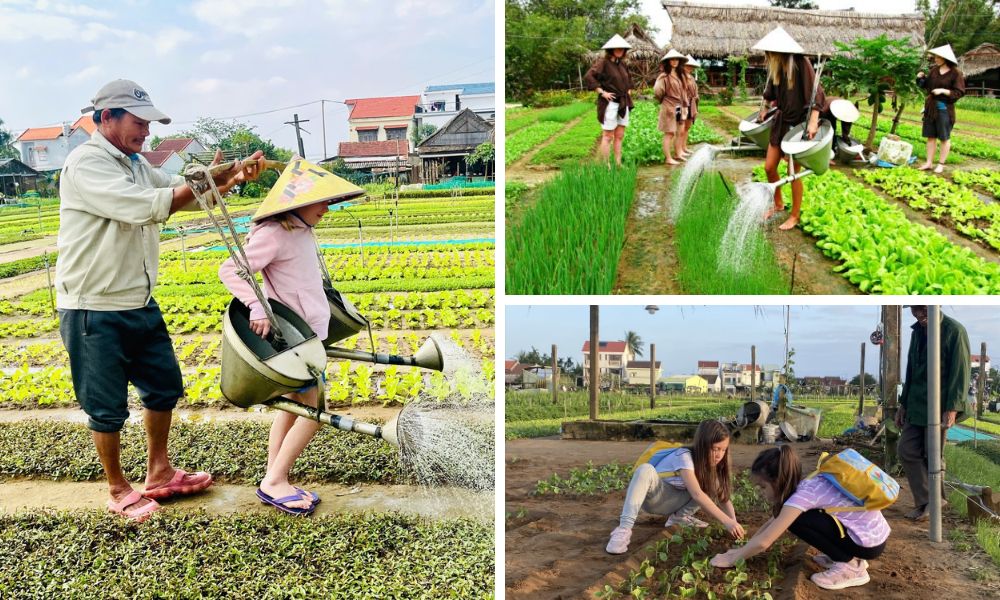
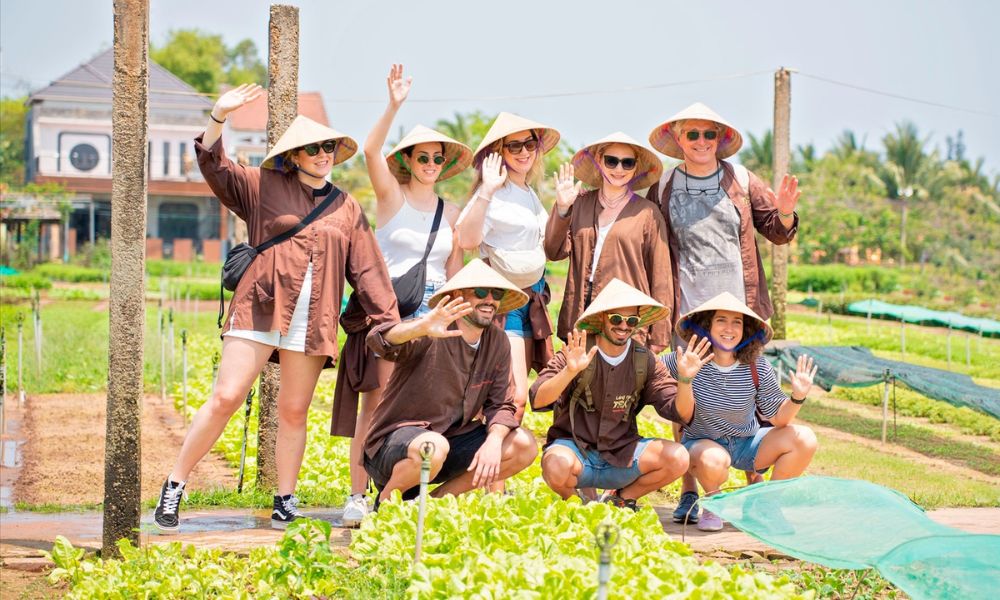
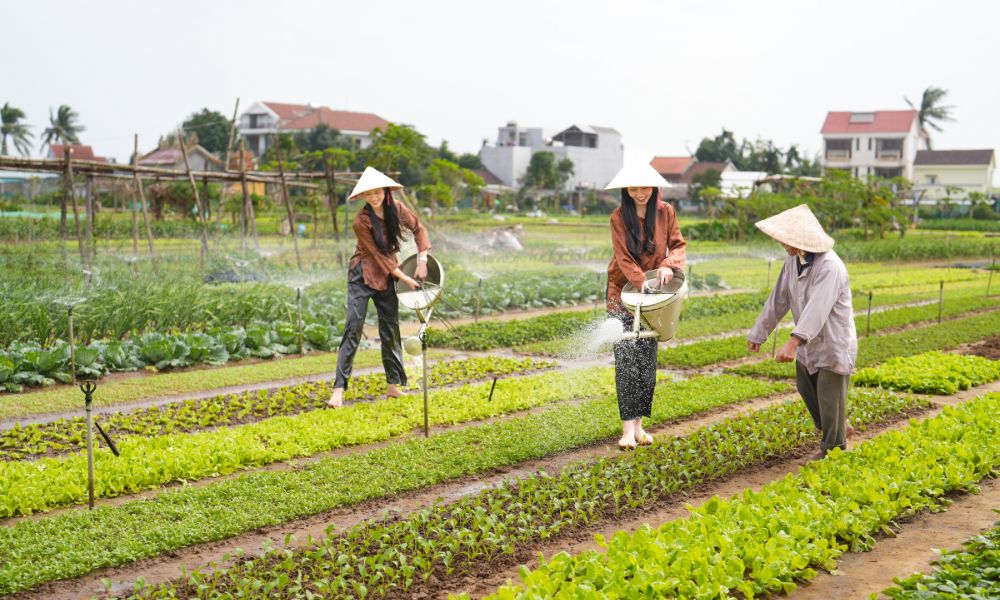
Figure 3. Tourists experience being farmers and growing vegetables in Tra Que village.
Experience the peaceful atmosphere at Tra Que vegetable village in Hoi An.
After experiencing farming, you’ll realize one thing very clearly: Tra Que vegetable village is not just a place to grow vegetables, but also a true haven for relaxation.
No car horns, no rush. Just:
- Rows of green vegetables stretch out
- The sound of watering is steady.
- A gentle breeze blows across the field.
If you go early in the morning, the air is cool and pleasant. In the afternoon, the sunlight is gentle, perfect for strolling and taking photos.
This is the kind of tranquility you’d be hard to find in the bustling Old Town. And that’s why many people say Tra Que is Hoi An’s “quiet haven.” When returning to the center, many people choose to find a vantage point from above at rooftop cafes in Hoi An to better understand this contrast.
Join a cooking class using Tra Que vegetables.
Another experience well worth trying at Tra Que vegetable village in Hoi An is participating in a cooking class.
The great thing is that everything starts in the garden. You can pick your own vegetables, then bring them into the kitchen and learn how to cook them.
The dishes that are usually recommended are those that are specialties of Hoi An, such as:
- Vietnamese savory pancake (Banh Xeo)
- Three friends
- Tra Que Vegetable Salad
- Quang noodles
When added to dishes, Tra Que vegetables retain their crispness and distinct aroma. Even if you’re not a connoisseur, you can easily notice the difference.
The class process is usually quite relaxed. The chef or instructor will demonstrate first, then you practice on your own. There’s no pressure to do it perfectly; the main goal is for you to understand how to cook and get the ingredients right.
Interestingly, after cooking, you get to sit down and eat the very dish you just made. It’s a truly fulfilling experience, from ingredients to finished product.

Figure 4. Cooking class in the vegetable village.
See more: TOP 7+ Hoi An Cooking Class Most Loved by International Tourists
A culinary experience closely associated with Tra Que vegetable village in Hoi An.
The cuisine here isn’t fancy, but it’s very authentic. This “authenticity” is also the reason why many local restaurants are recognized in the Official List of Hoi An Restaurant Michelin
Vegetables are always the highlight. When you eat them, you’ll see it clearly:
- The herbs are more aromatic.
- Stronger flavor
- Not as bland as industrially grown vegetables.
Even a simple plate of raw vegetables can leave a lasting impression. That’s something you won’t find everywhere. For many tourists, especially foreigners, the dining experience in Tra Que vegetable village is what they remember most fondly.
Cycle and explore Tra Que vegetable village.
Besides the experiential activities, simply cycling around Tra Que vegetable village in Hoi An is enjoyable enough.
The village roads are small and easy to navigate, lined with vegetable fields on both sides. You can drive slowly and stop anywhere without being hindered by traffic.
The area here is very green and clean. The air is fresh, with little dust, quite different from the city center. If you continue moving towards the sea, you will clearly feel the shift to the surrounding areas beach bar in Hoi An with a completely different atmosphere.
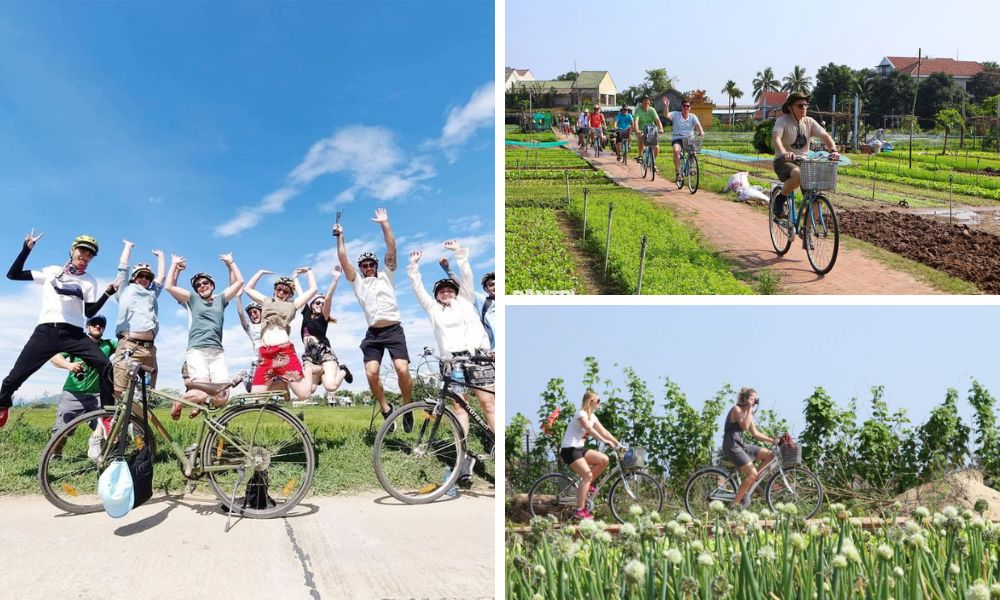
Figure 5. Tourists cycling around the village area to experience the peaceful atmosphere.
Natural photo spots in Tra Que vegetable village
Without needing elaborate setups, Tra Que vegetable village is naturally very photogenic.
- Here are a few spots you’re likely to spot:
- The rows of vegetables are perfectly straight.
- People are watering the vegetables.
- Small paths through the fields
The light here is also beautiful, especially in the early morning or late afternoon. Just standing in that setting, you can get very natural, unforced photos.
Why is the experience at Tra Que vegetable village worthwhile?
The greatest strength of Tra Que vegetable village in Hoi An does not lie in its scale or grandeur.
It’s about real experience.
You’re not just “going to watch,” but:
- Made
- To be able to eat
- Understood
And more importantly, you experience a very different pace of life. Slower, gentler, yet very distinct and pleasant. That’s the value that makes many people return, or at least always remember this place after their trip.
Latest ticket prices for Tra Que vegetable village.
If you’re looking for the entrance fee to Tra Que Vegetable Village to plan your trip, the most important information is: the current entrance fee is 35,000 VND per person, and this is quite affordable considering the experience you get at one of Hoi An’s typical eco-tourism villages.
Below is complete and clear information to ensure you don’t miss anything when preparing for your trip.
Current entrance fee to Tra Que vegetable village
Currently, to visit Tra Que vegetable village in Hoi An, you will need to buy an ticket at a price of 35,000 VND per ticket.
Some important notes:
- Children under 16 years old are counted as two children sharing one ticket.
- If you are traveling in a group of 8 or more people, you will receive free tour guide assistance.
- If the group has 15 tickets or more, one ticket will be discounted.
Compared to many other tourist attractions in Hoi An, this price is quite reasonable. The ticket is not just an entrance fee, but also contributes to maintaining the vegetable village’s operations in line with green tourism principles.
Ticket prices for the Tra Que vegetable village experience.
In addition to the basic entrance fee, if you want to have a more in-depth experience at Tra Que vegetable village, there will be additional costs for activities.
Common experiences typically include:
- Farming alongside the local people.
- Learn to cook with Tra Que vegetables.
- Experience combo including food and drinks.
The price for these activities is not fixed at a single figure because it depends on:
- The experience package you choose
- Duration
- Does it include meals?
In reality, these experiential tours usually cost around a few hundred thousand Vietnamese dong. In return, you’ll receive detailed guidance, direct supervision, and a complete experience from farming to eating.
If you just want a relaxing visit, the 35,000 VND ticket is sufficient. But if you want to gain a deeper understanding of Tra Que vegetable village in Hoi An, I recommend trying at least one experiential activity.
Do I need to buy a ticket before entering Tra Que vegetable village?
The short answer is: it’s not mandatory to buy in advance.
You absolutely can:
- Go directly to the village
- Purchase tickets at the gate or at ticket counters within the area.
However, in some cases, you should make a reservation:
- Follow the large group.
- I want a private tour guide.
- Sign up for a cooking class or an in-depth experience.
Making a reservation will give you more control and help you avoid waiting or being unable to find a seat during peak hours.
Expenses incurred when visiting Tra Que vegetable village.
Besides the entrance fee to Tra Que vegetable village, you should budget for some small additional expenses to make your trip more comfortable.
Some common options include:
- Bicycle or motorbike rental costs: If you’re coming from the Old Quarter, you can rent a bicycle to explore. Prices are usually not high, but it’s still a good idea to consider this beforehand.
- Food costs: There are small eateries and cooking experience areas in the village. If you eat there, the cost will vary depending on the dish and the package. Among these options, the most popular choice remains Hoi An seafood dishes, especially when combined with a trip to the beach after sightseeing.
- Experience costs: As mentioned above, there will be additional fees if you participate in farming or cooking classes.
- Expenses for local specialties: Some tourists enjoy buying local vegetables or produce to take home. This is not mandatory but is quite enjoyable.
At this price, you not only get to visit but also have the opportunity to experience a truly green tourism model. A place where the landscape, people, and farming methods have retained their original character for over 400 years. If you’re considering whether or not to go, in terms of cost and experience alone, Tra Que Vegetable Village in Hoi An is a very worthwhile destination to try while in Hoi An.
When is the best time to visit Tra Que vegetable village?
If you’re looking for the ideal time to visit Tra Que vegetable village, the short answer is: it’s best in the early morning or late afternoon, during the dry season from around February to August, when the weather in Hoi An is pleasant, the vegetables are lush green, and the outdoor experience is at its best.
However, to make your trip truly memorable, you need to understand each factor such as the time of day, seasons, and weather characteristics of Hoi An. This is a part that many people overlook, but it greatly affects the actual experience.
The ideal time of day to visit Tra Que vegetable village.
During the day, Tra Que vegetable village in Hoi An is at its most beautiful during two time slots.
Early morning, from approximately 6:30 to 9:00 AM
This is when the villagers begin their work. You’ll clearly see the true rhythm of village life. People watering vegetables, people tilling the soil—everything happens very naturally. The air is cool, the sunlight is gentle, and it’s very pleasant. If you want to experience farming, this is the most suitable time. It’s less sunny, and you can participate with the villagers in a genuine way.
Late afternoon, from approximately 4 PM to 5:30 PM
The light at this time is beautiful. The sunlight is a soft golden hue, not too harsh. It’s perfect for strolling, taking photos, and enjoying the peaceful atmosphere of Tra Que vegetable village. Conversely, around midday it’s usually quite sunny, especially in the summer. If you go at this time, you might feel a bit tired and find it difficult to fully enjoy the experience.
After experiencing the refreshing green lifestyle at Tra Que Vegetable Village, many tourists choose to return to the ancient town to continue their exploration of Hoi An through its cuisine, an inseparable part of the local culture. Located right in the center and easily accessible from Tra Que, Chau Kitchen & Bar is a trusted stop for many diners and is also mentioned as the best restaurant Hoi An, highly rated by international tourists for its consistent quality and complete experience.
Chau Kitchen & Bar is a fusion Asian-European restaurant where cuisine goes beyond just flavor, clearly reflecting the philosophy behind ingredient selection and preparation. The restaurant prioritizes using fresh vegetables from Tra Que vegetable village daily, combined with local seafood to preserve the freshness and authenticity of each dish. Iron Beefsteak Hoi An – A signature highlight is the beef, cooked on a hot cast-iron griddle, which helps retain its juiciness and rich, European-style flavor while still maintaining a unique and creative touch. In addition, the diverse menu features a fusion of Asian and European dishes such as pasta, salads, seafood, and creatively adapted local specialties, catering to a wide range of tastes, from individual diners to large groups.
Located in a more than 100-year-old house, the restaurant retains the distinctive architecture of Hoi An with its yellow walls, wooden frames, and warm lighting, creating a feeling that is both intimate and elegant. With its spacious area and flexible layout, Chau is suitable for solo diners, couples, and groups, especially with seating areas offering street views at night, providing a romantic dining experience in the heart of the heritage site. After a day exploring Tra Que, enjoying dinner at Chau Kitchen & Bar is not just about eating, but also about fully connecting with the ingredients, culture, and unique atmosphere of Hoi An.
- Address: 141 Tran Phu, Minh An Ward, Hoi An Ancient Town
- Phone: 0903529377
- Opening hours: 08:30 – 22:30
- Website: https://chaukitchenandbar.vn/en/homepage/
- Facebook: https://www.facebook.com/Chaukitchenhoian
- You can book a table directly through the website: Reservation
- Rating on Google Map: 4.8/5.0
- TripAdvisor Rating: 4.8/5.0

Figure 6. Chau Kitchen & Bar – the best restaurant in Hoi An, highly rated by international tourists.
How does the weather affect Hoi An?
Weather is a factor that directly affects the experience at Tra Que Vegetable Village in Hoi An because most activities take place outdoors.
Hoi An has two distinct seasons.
The dry season lasts from approximately February to August: The weather is sunny with little rain, making it ideal for sightseeing and experiencing the area. This is also the time of year most tourists choose to visit.
The rainy season lasts from approximately September to January: The weather can be rainy for extended periods, sometimes causing minor flooding in some low-lying areas. This can affect transportation and outdoor experiences in the fields.
However, the rainy season doesn’t mean you shouldn’t visit. If you prefer a quieter atmosphere, fewer crowds, and a more tranquil rice field landscape, it’s still a great option.
See more: HOI AN WEATHER: Detailed guide to the best month to travel to Hoi An
The most beautiful vegetable season in Tra Que vegetable village.
In fact, Tra Que vegetable village grows vegetables all year round. But in terms of beauty and the ability to make a lasting impression, the period from February to May is the most ideal.
Right now:
- The weather is cool and there is little rain.
- The vegetables are growing well and are uniformly green.
- The scenery is very pleasing to the eye.
This is also springtime, when the trees are fresh and the air is pleasant. If you want to have a complete experience in terms of both scenery and activities, this is the ideal time.
Things to note when visiting Tra Que vegetable village during the rainy season.
If you visit Tra Que vegetable village in Hoi An during the rainy season, you can still have a good experience, but you should prepare a little beforehand.
- First, check the weather: Avoid days with heavy or prolonged rain. Choose days with light or no rain for easier travel.
- Prepare appropriate clothing: Comfortable, non-slip shoes. You can also bring a light raincoat or umbrella.
- Limit activities outside the fields: When the land is wet, farming becomes more difficult and uncomfortable. At this time, you might prioritize cooking experiences or relaxing sightseeing.
One positive aspect is that there are usually fewer customers during the rainy season. The space will be quieter, suitable if you like privacy.
If you choose the right time, Tra Que vegetable village is not only a place to visit but also a very memorable experience. It’s a place where you can clearly feel the slow pace of life and the connection between people and nature, something that not every tourist destination still retains.
Experiences of visiting Tra Que vegetable village from locals.
If you’re looking for a unique experience visiting Tra Que vegetable village, the most important thing to know is that this isn’t a “quick visit, check-in, and leave” type of tourist spot. Instead, it’s a place where you should slow down, truly experience it, and take your time to fully appreciate it.
From a practical standpoint, many people visiting Tra Que vegetable village in Hoi An for the first time often don’t know the best way to get there. The following information will help you avoid common mistakes and have a more fulfilling experience.
Should you travel independently or join a tour when visiting Tra Que vegetable village?
The answer depends on how you want to experience it.
If you value freedom and control over your time, then independent travel is a good option. You can:
- Cycling from the Old Quarter
- Explore the vegetable beds yourself.
- Stop wherever you like.
This method is suitable if you just want to do some light sightseeing and take photos.
Conversely, if you want to gain a deeper understanding of Tra Que vegetable village, you should consider joining a tour or signing up for an on-site experience. Because:
- Someone provided clear instructions on how to grow vegetables.
- Being able to participate in farming according to proper procedures.
- Gain more cooking experience.
In fact, many international tourists choose tours not because they can’t travel independently, but because they want to understand the story behind the vegetable village.
My personal experience is that if you have the time, you should combine both. Go on a trip to experience the place, then participate in an experiential activity to gain a deeper understanding.
What is a reasonable amount of time to spend visiting Tra Que vegetable village?
A very practical question is: how much time should one spend at Tra Que vegetable village in Hoi An?
If you only want to do basic sightseeing and stroll around, you’ll need about 1 to 2 hours. This time is enough to:
- Walking around the village
- Take a photo
- Observe the activities of the people.
If you’re participating in a farming or cooking experience, you should allocate about 2 to 4 hours. This is a reasonable amount of time to avoid rushing and to fully enjoy each activity.
Many people tend to rush through their visit, only staying for 30 minutes before leaving. This causes them to miss the most interesting part of Tra Que vegetable village: the hands-on experience.
Appropriate attire for participating in the experience at Tra Que vegetable village.
Since most of the activities take place outdoors and in the fields, clothing is something you should prepare carefully.
Recommended choice:
- Comfortable clothes that allow for easy movement.
- Shoes or sandals may have a little mud on them.
- A hat or cap to protect from the sun.
If you intend to participate in farming, don’t dress too nicely or elaborately. You’ll be digging, watering, and you’ll definitely get mud on you.
A helpful tip is to bring a change of light clothing after your experience. This will make you more comfortable if you continue to visit other places.
Important things to note when visiting Tra Que vegetable village in Hoi An.
This is the most important part, especially if you want to have a good experience and respect the local culture.
- Respect the production space: Tra Que Vegetable Village is not a showroom, but a place where people work every day. When visiting, you should:
- Do not step on the vegetable beds.
- Do not pick vegetables without permission.
- Maintain a gentle and polite attitude: The locals here are very friendly, but they also have their own way of life. A greeting and a smile will make your experience much better.
- Choose the right time: As mentioned, avoid the midday sun. Going in the morning or afternoon will be more comfortable.
- Prepare cash: Some small businesses in the village may not support electronic payments. Bringing cash will be more convenient.
- Don’t expect too much “tourism”: The special thing about Tra Que vegetable village in Hoi An is its rustic charm. If you expect a modern place with lots of entertainment, you might find it simple. But if you’re looking for an authentic experience, this is well worth it.
Getting to Tra Que vegetable village isn’t difficult. But to fully appreciate its charm, you need to go the right way. You’ll find it’s not just a tourist attraction, but a very authentic glimpse into Hoi An life. A place where everything retains its simplicity, yet leaves a lasting impression. When combining your itinerary, you can return to the Old Town to explore more of its system ancient houses in Hoi An, it bears a distinct historical imprint.
Who is Tra Que Vegetable Village in Hoi An suitable for?
If you’re wondering if Tra Que Vegetable Village in Hoi An is right for you, the quick answer is: it’s suitable for those who enjoy hands-on experiences, love nature, and want to understand local life at a slow, authentic pace.
Conversely, if you’re looking for lively entertainment or “quick-visit, quick-photo” check-in spots, then Tra Que vegetable village might not be the ideal choice.
Below is a detailed analysis to help you decide whether or not you should go.
Family with young children
Tra Que Vegetable Village is one of the rare places in Hoi An suitable for families with young children, especially those who love to explore.
The reason is quite simple. There are no enclosed spaces or complicated activities here. Everything takes place outdoors, in a relaxed and accessible way.
Children may:
- Observe how vegetables are grown.
- Water the plants by hand.
- Touch the earth, the trees, and the water.
These experiences, though simple, are very valuable, especially for children living in the city. Instead of just watching on a screen, they get direct contact with the natural environment.
However, parents should remember to choose a cooler time of day and prepare appropriate clothing so that children can move comfortably.
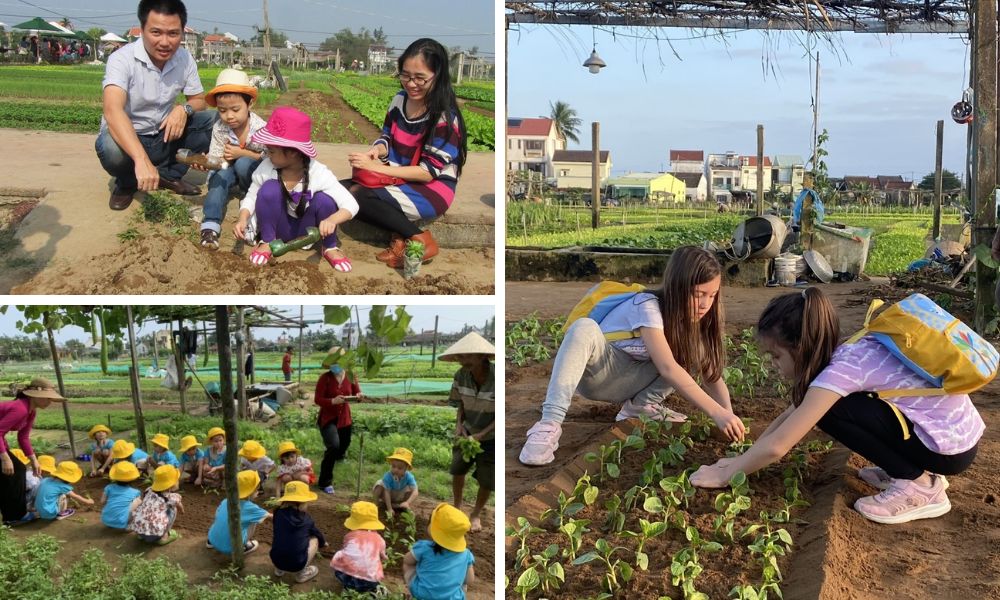
Figure 7. Children really enjoy outdoor gardening activities.
Tourists love cultural experiences.
If you’re someone who enjoys exploring local culture, then Tra Que Vegetable Village in Hoi An is practically a “must-visit” destination. This exploration is often linked to community projects such as assembly halls in Hoi An, a place that clearly reflects the local cultural life.
The unique aspect here is that the experience isn’t theatrical. You don’t just stand and watch; you can:
- Farming alongside the local people.
- Listen to them share about how they grow vegetables.
- Understanding how a traditional craft village has survived through generations.
This is a type of experience that emphasizes “deep understanding,” not just “seeing for the sake of knowing.”
Many international tourists choose Tra Que for this reason. They want to understand how the Vietnamese people live, work, and are connected to their land.
People who prefer green and peaceful travel.
In the context of Hoi An becoming increasingly crowded with tourists, Tra Que vegetable village stands out as a completely different place.
Not noisy, not crowded. Instead, it’s:
- Spacious green areas
- Slow pace of life
- Clean air
If you’re looking for a place to “slow down,” this is a great option.
In particular, the vegetable farming model here is natural, using seaweed and minimizing chemicals. This resonates strongly with many people interested in sustainable tourism and a green lifestyle.
Those who are not suitable for Tra Que vegetable village
Despite its many attractions, Tra Que vegetable village in Hoi An is not for everyone.
You might not find it suitable if:
- You prefer lively tourist destinations: There are no games or fast-paced entertainment here. Everything is quite slow and relaxed.
- You want a quick check-in and then leave: If your schedule is too tight, only allowing a few dozen minutes, the experience will be quite bland. The vegetable village needs time to be truly appreciated.
- You don’t like outdoor activities: Much of the experience takes place in the sun, on the ground, and in open spaces. If you’re sensitive to the sun or afraid of getting dirty, it might not be comfortable.
Understanding this before you go will not only help you avoid disappointment, but also allow you to enjoy Tra Que vegetable village in Hoi An in the way it truly is.
Tra Que Vegetable Village – A slow-paced experience in the heart of Hoi An
Tra Que Vegetable Village is not just a tourist destination, but a truly authentic slow-paced experience in the heart of Hoi An. Its value lies not in its scenery, but in its people and how they have preserved traditional vegetable farming methods for hundreds of years, from using seaweed to entirely manual care. When you visit, you not only sightsee but also truly experience local life, understanding how a traditional craft village thrives and develops sustainably. Therefore, Tra Que Vegetable Village in Hoi An is especially suitable for those who want a hands-on experience, love nature, and seek a peaceful, authentic corner amidst their exploration of Hoi An. If you visit at the right time, this experience can even be combined with the festive atmosphere of festivals such as Da Nang International Fireworks Festival 2026 – DIFF 2026.

Post on: 20/03/2026 05:07


